
ISSUE 63 AND EARLIER
Published online prior to Sept. 2025
Please note: If you cannot find your previously published piece using the below search function, please email publisher.columbia@gmail.com and attach the piece as well as an updated author bio. We will republish your piece as soon as possible. Thank you for your patience and understanding.

Writing About Real People: An Interview with Briallen Hopper
In this interview, Charlee Dyroff talks to Briallen Hopper about her new essay collection, Hard to Love, out February 5, 2019. Hard to Love was named one of the most anticipated books of 2019 by both Lit Hub and The Millions.

My Barber Left New York City Before I Did
For nearly 10 years, my haircuts were cheap and they were good. To me, in fact, they were excellent. I got them from a barber named Gasper (from the Italian, Gaspare) in Williamsburg, Brooklyn. Most of the trips I took to Gasper’s came after I had moved out of the neighborhood to South Brooklyn. Other customers trekked further than me—from Hicksville, Long Island or from towns in New Jersey. Others had been customers for longer than my nine years. Some had gotten their hair cuts or shaves or shoulder massages (yes, he did shoulder massages with an old school, hand-held, vibrating machine) by Gasper for decades.
12 Nonfiction Books We’re Excited About in 2019
With the start of 2019 comes a bevy of new books to explore. And while the list is overwhelmingly endless, we’ve done a little of the homework for you and selected a few nonfiction books we can’t wait to get our hands on. From works by icons like Toni Morrison, to debuts from rising stars like Jia Tolentino, 2019 has a little something for every type of nonfiction reader. Here are 12 forthcoming releases that have our nonfiction loving hearts all aflutter.
You Can’t Play It Safe: An Interview with Meghan Daum
In this interview, MFA nonfiction candidate Veronika Kelemen speaks with writer and Columbia professor Meghan Daum. Daum is the author of two collections of essays, My Misspent Youth and The Unspeakable: And Other Subjects of Discussion; a memoir, Life Would Be Perfect If I Lived In That House; and the novel The Quality of Life Report, and also edited the anthology Selfish, Shallow & Self-Absorbed: Sixteen Writers On The Decision Not To Have Kids. She is a 2015 Guggenheim Fellow and the recipient of the 2016 National Endowment for the Arts fellowship in creative writing.
Review: On Sunset by Kathryn Harrison
If a book is as strong as its strongest character, Kathryn Harrison’s On Sunset has the advantage of many to choose from: the grandmother— a British Jewish heiress of Baghdadi extraction, the kind and adventuresome grandfather who helped tame the wilds of the Alaskan wilderness before it became a state, the colorful Sassoon family who were known as the “Rockefellers of the East”, getting rich selling opium to the Chinese and selling futures in rubber plantations across Asia, eventually having fifty British, Chinese, and European servants to wait on a family of four.

The Revolution Is Not Currently on View: Notes on Art’s Political Futility
The world is rapt with chaos. Ascendant reactionary movements across the globe, largely motivated by overt racism and xenophobia, have disrupted the convenient narrative of uninterrupted social progress, melding the frustrations of a weakening, shrinking, and resentful middle class into anger and fear.
From Solitaire to Solidarity
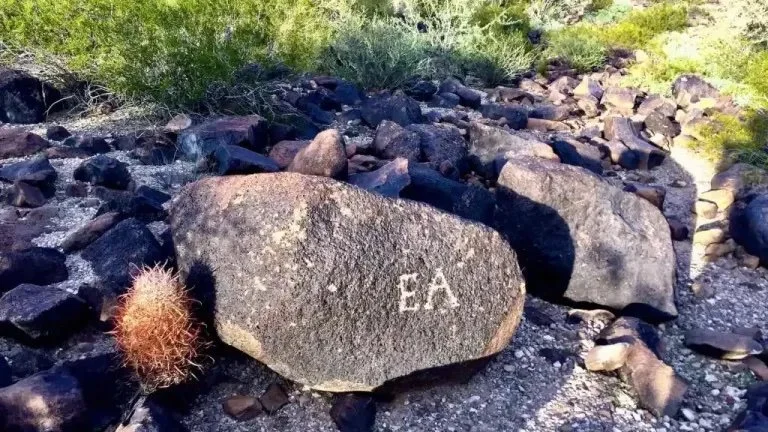
The day after Edward Abbey died, in the spring of 1989, his friends and family wrapped his body in a sleeping bag, packed it in dry ice, and loaded it into the bed of a blue Chevy pickup. They drove west out of Tucson, then south toward Mexico, cruising along the blacktop, then crunching dirt and rock as they chased the late-afternoon sun deep into the heart of the Sonoran Desert. There, amid the flat, alluvial basins and the ragged, looming ranges of the Cabeza Prieta Wildlife Refuge, somewhere just north of the borderline, in the brittlebush and creosote and ocotillo and saguaro stands, they committed Abbey’s body to the earth. They chiseled his epitaph into a slab of varnished basalt: “EDWARD PAUL ABBEY / 1927-1989 / ‘NO COMMENT.’”

Review: Heartland by Sarah Smarsh
When I first picked up Sarah Smarsh’s book Heartland: A Memoir of Working Hard and Being Broke in the Richest Country on Earth, I expected to find a familiar story. Like Smarsh, I grew up in a rural farming community in America’s heartland. I knew the unceasing nature of work on a farm, though ours was just big enough to sustain my own family, and the weekly routine of clipping out coupons that determined which cereals you could buy at the grocery store that week.
Review: Good and Mad by Rebecca Traister
“You do not have to be good,” writes Mary Oliver, at the beginning of her seminal poem, “Wild Geese,” and I thought of this poem often as I devoured Rebecca Traister’s new book, Good and Mad. What is it to be good, and good how, and good for whom?
An Honest Assessment
A broken wrist? Snap, cry, sniffle, itch – healed. That person’s upset stomach? Gag, vomit, vomit some more, tears, learn to hate Gatorade – healed. How about your cold? Throat tickle, insomnia, cough, the snot runs out your nose and slides across your lips and pools on your pillow, you watch The Price is Right – healed. Our bodies are amazing in their ability to self-rectify an aberrant system. The treatments we realize only seek to enhance this ability, and that synergistic relationship of reflexive body and conscious mind is nothing short of astounding.
Review: Elena Ferrante’s ‘My Brilliant Friend’ on HBO
It begins in the dark: a phone vibrates, and a woman lying in bed answers it. “Pronto,” she says. “Mama’s missing,” the voice of a man on the other end says in Neapolitan dialect.
Complexity and Ambiguity: An Interview with Chelsea Hodson
In an interview with nonfiction MFA candidate Katie Shepherd, Chelsea Hodson speaks to writing from the self, interrogating ideas, and the joys and melancholies of life. Chelsea is the author of the book of essays Tonight I’m Someone Else and the chapbook Pity the Animal. Her writing has appeared in The New York Times Magazine, Frieze Magazine, Black Warrior Review, and elsewhere. She has been awarded fellowships from MacDowell Colony and PEN Center USA Emerging Voices and teaches at Catapult and Mors Tua Vita Mea.
Review: The Condition of Secrecy by Inger Christensen
What do fractals and poetry have in common? What can be gained by thinking about randomness as a universal force? Why does something happen, instead of nothing? The Condition of Secrecy by Inger Christensen offers a new vibrant spectrum of potential answers. Considered to be a master of the avant-garde in Denmark, this posthumous translation of a collection of essays allows readers to experience her work at its most constructionally simplified. The collection is a chorus of lyrical memoir and philosophical discourse about poetry making. The discourse is written in a way in which the reader is also positioned as a poet, often articulating ideas in relationship to the reader as a fellow excavator into the chasm. Christensen’s musings articulate her ars poetica contingent on the inseparability between varying discourses, —ranging from mathematical to metaphysical as she relates, “Poetry is just one of human beings’ many ways of recognizing things, and the same schism runs through each of the other ways, be it philosophy, mathematics, or the natural sciences.” This interplay between language as a part of nature is as a way of collapsing the taxonomy that places poetry as esoteric or high-culture. Rather, poetry exists within more reachable and perceivable elevations.
Into Another World: An Interview with John McPhee
In an interview with MFA candidate Raffi Joe Wartanian, John McPhee reflects on the panic, procrastination, and prolific output behind his celebrated approach to nonfiction. McPhee’s 38th book The Patch is one of seven essay collections for the longtime Princeton University faculty member and alumnus who began writing for The New Yorker in 1963. A recipient of the 1999 Pulitzer Prize (General Nonfiction) and a Lifetime Achievement Award from the National Book Critics Circle, McPhee is regarded as one of the major figures in helping shape the form of creative nonfiction.
A Purple State
All Aboard
Pittsburgh is a blue city nestled in the red part of a purple state. A political bruise. Take, for example, the pizza place on Cypress Street with the sign high up on the side of it, a four-by-four poster that has a caricature of Hillary Clinton holding a megaphone and yelling all aboard the Trump train. A week after it was put up — by the landlord of the building? The owner of the restaurant? A pizza-maker? — someone had launched something wet and gray and slimy at it, the remnants now a dark smear across the train and Hillary and dribbling down the building. I can only guess as to the contents of the projectile. A leaky bag of garbage, maybe? A torn bag of fresh dog shit? It’s impossible to say. The place also sells halal burgers. It says so, proudly, in the window, though I can’t attest to quality of the pizza or the meat.
Review: The Shell Game Edited by Kim Adrian
If good creative writing sparks the instinct to write, The Shell Game provides ample embers to inspire a wide range of writers. Edited by Kim Adrian with a foreword by Brenda Miller, this new anthology published by The University of Nebraska Press is devoted to a type of nonfiction called the hermit crab essay. The hermit crab essay is a work whose form embodies the content in bold, literal, and symbiotic ways. (Think: an essay on accomplishments organized as a resume, a meditation on the daily grind written as a to-do list, etc.) When pondering this particular approach, where a lyric essay “borrows” another form to tell its story, Adrian muses that a hermit crab essay’s formal, often bizarre looking exterior can allow it to “exert its full magic, tempting one’s inner aesthete with its very oddness, forcing upon its readers a private debate: Is this a thing of beauty? An ingenious expression of the human imagination? Or a cop out?”
Our Lady of the Snows
It was mid-April and the snow had already melted by the time my husband and I and our two young children arrived at Our Lady of the Snows, a Trappist monastery in the Ardèche region of southeast France. Along with Thomas Merton’s Zen and the Birds of Appetite and my writing journal, I’d packed my ISYM (I’ll-show-you-motherfucker) list all the men I’d ever slept with, save my husband of eleven years. I’d been struggling let go of the list, and now ready, planned to burn it at some point during our stay.
Review: Call Them by Their True Names by Rebecca Solnit
I first read Rebecca Solnit in San Rafael, just north of San Francisco’s Golden Gate Bridge. It’s the perfect place to read her: San Francisco is a place she currently calls home and the Bay Area has influenced her writing since at least her days as a graduate student in journalism at UC Berkeley in the mid-1980s. At the behest of my boss, I read her seminal feminist essay, “Men Explain Things to Me,” on my work computer. It was from this piece that the term “mansplaining” was spawned, though Solnit herself didn’t coin it. To write an essay which rings true to so many individuals’ experience as to popularize a new word is a feat, and Solnit has already accomplished it.