
ISSUE 63 AND EARLIER
Published online prior to Sept. 2025
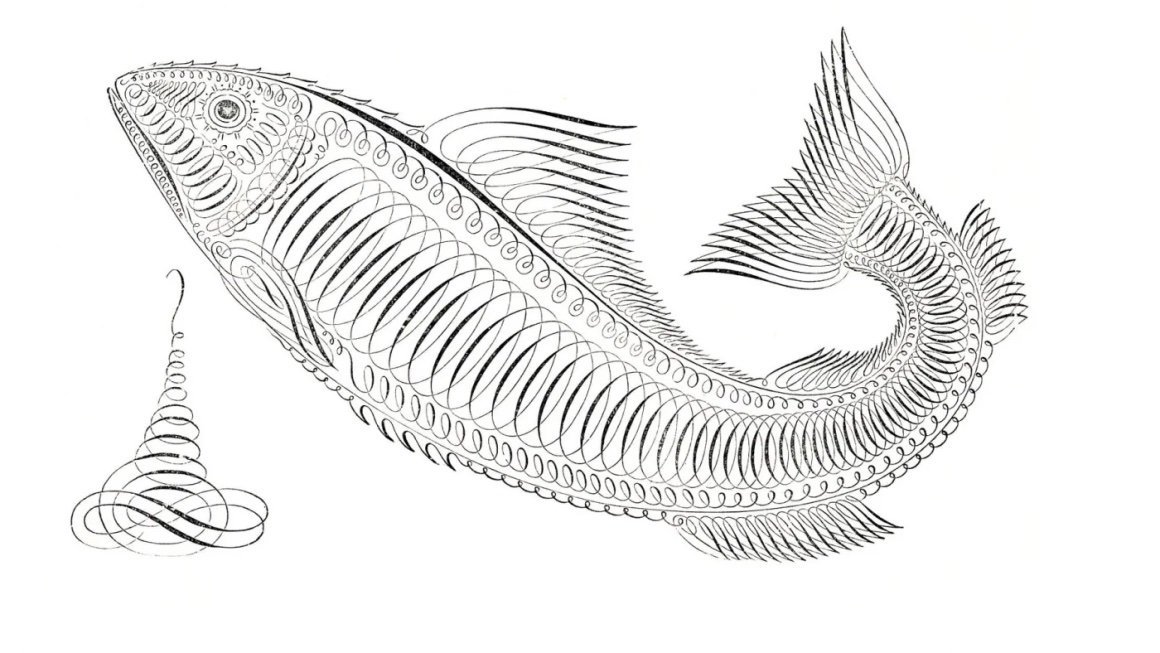
Nearly Eternal Fusion Reactor
Something burning or maybe already burnt
A cataract climbs a triage
How many bushels in an apple?
Blurbed: What to Read, See and Do in December 2018
Welcome to Blurbed, a round-up of literary recommendations from the editors and contributors at the Columbia Journal! Each month, Blurbed features a curated list of things to read, events to attend and news from the Journal.
The Word Process: An Interview with Samantha Hunt
The Word Process is an interview series focusing on the writing process and aimed at illuminating the many ways that writers approach the same essential task. In this interview, Samantha Hunt talks about the “dead people’s things” that surround her writing desk, why writers should “revise forever,” and why she works on many projects at the same time.
Two Poems by Ali Rashid Translated from Arabic
These poems by the Iraqi visual artist and poet Ali Rashid have been translated from Arabic by Dr. Saleh Razzouk and Scott Minar.
Review: Good and Mad by Rebecca Traister
“You do not have to be good,” writes Mary Oliver, at the beginning of her seminal poem, “Wild Geese,” and I thought of this poem often as I devoured Rebecca Traister’s new book, Good and Mad. What is it to be good, and good how, and good for whom?
Review: North of Dawn by Nuruddin Farah
How do we negotiate the spaces in which cultures meet? How do we balance our desire for tradition with an increasingly global world? What do we do when the understanding and support of a loving family isn’t enough?
DINNER LANGUAGE!
Whatever is cool. Whatever is fine. Simple
is fine. Simple is more than fine. Home is fine too.
I’ll survive. As long as it’s something.
Review: Camellia Street by Mercè Rodoreda, Translated by David Rosenthal
When I first heard of Mercè Rodoreda, I was on a tour of an aerial bunker far beneath the streets of Barcelona, packed in tight with twenty strangers, sitting quietly in the dark and listening to the sounds of labored breathing. The bunker was located in the middle of Gracià, the neighborhood in which Rodoreda’s work is set, and I had signed up for the tour to better understand a crucial piece of Catalan history, one that Rodoreda takes as the starting point for her work — the realities of the Spanish Civil War, and its devastating, far-reaching fallout in Barcelona.
An Honest Assessment
A broken wrist? Snap, cry, sniffle, itch – healed. That person’s upset stomach? Gag, vomit, vomit some more, tears, learn to hate Gatorade – healed. How about your cold? Throat tickle, insomnia, cough, the snot runs out your nose and slides across your lips and pools on your pillow, you watch The Price is Right – healed. Our bodies are amazing in their ability to self-rectify an aberrant system. The treatments we realize only seek to enhance this ability, and that synergistic relationship of reflexive body and conscious mind is nothing short of astounding.
A Better Son
When he finds out about the gastrectomy, Pedro does not buy the first flight back home to Brazil. He hangs up the phone, walks over to the bathroom and knocks on the door more forcefully than usual.
Review: Elena Ferrante’s ‘My Brilliant Friend’ on HBO
It begins in the dark: a phone vibrates, and a woman lying in bed answers it. “Pronto,” she says. “Mama’s missing,” the voice of a man on the other end says in Neapolitan dialect.
The Word Process: An Interview with Lauren Wilkinson
The Word Process is an interview series focusing on the writing process and aimed at illuminating the many ways that writers approach the same essential task. In this interview, Lauren Wilkinson talks about making writing a habit, why she runs errands when she’s stuck, and protecting time for your writing.
Four Poems from Ortsion Bartana Translated from Hebrew
Four poems from the Israeli poet Ortsion Bartana, translated from the original Hebrew by Hana Inbar and Robert Manaster.
Fire Ants
Tyler ate fire ants. He didn’t eat them out of hunger, and he didn’t eat them often. But when he did, he made sure no one knew. On any given blade of grass, he would find the ants slowly crawling their way up and over and around. He would uproot them. Take the blade, with the ants circling and circling, and he would shove it in his mouth.

Ask the Editor: An Interview with Sarah Cantin of St. Martin’s Press
Navigating the ins and outs of the publishing industry can feel like a Sisyphean journey, filled with opaque directions and endless confusing routes to nowhere. How does a book get published? What do you do when you have a manuscript that you’re ready to move forward with? And do you really need a literary agent?
What Makes a War Story: An Interview with Phil Klay
Phil Klay is the New York Times bestselling author of Redeployment, which among other accolades won the National Book Award for Fiction in 2014. A Marine Corps veteran, Klay writes extensively on issues ranging from religion to combat to national and foreign policy. His work has been published in The Atlantic, The New York Times, Time Magazine, Men’s Journal, and more.
As a civilian war writer, I’ve been familiar with Phil Klay’s work for years, but have not had the opportunity to speak to him until this interview. Our conversation covers considerable ground, touching on everything from writing craft to national security to reading lists of contemporary war literature.
Review: Museum of the Americas by J. Michael Martinez
Photographs are often intimate artifacts, heirlooms, and a means by which our mortality is tracked and recalled. Many of our contemporary rituals around memory use photographs as a conjuring mechanism to reanimate the past. A timely hybrid-genre text, Museum of the Americas by J. Michael Martinez interrogates the white gaze and how the curation of the archive is another palimpsestic layer of control and power.
Three Poems by Franco Buffoni Translated from Italian
Three poems from Italian poet Franco Buffoni, translated by Moira Egan.