
ISSUE 63 AND EARLIER
Published online prior to Sept. 2025

Spring Contest Runner Up in Fiction: Aquanauts of Hudson Canyon
The nurse greets Leo from behind the apartment’s steel security door. Starched white uniform and too much Chanel No. 5, a paper nurse’s hat pinned to her messy, grey-streaked up-do. Leo’s no stranger to hospitals—he only just stretched the Bellevue psych ward I.D. bracelet off his wrist during the ferry ride over from lower Manhattan. But until now he’s never seen a nurse in anything but teal scrubs and a lanyard. Staten Island, always keeping it old school.
Spring Contest Runner Up in Nonfiction: Family Sauce
“Everything starts with garlic,” Grandma Sally said as I stretched on tiptoe. As I balanced gripping the metal oven door handle when I was hip high to her. As she pressed her belly into the oven door rather than tell me to stop. As my bare toes crunched papery garlic skin that had fluttered to the floor with the linoleum divot in front of the oven.
Spring Contest Runner Up in Nonfiction: The Magicians
All through that year, we believed in magic: magic that had the power to set things right, turn the ship around, get us out of there unscathed.
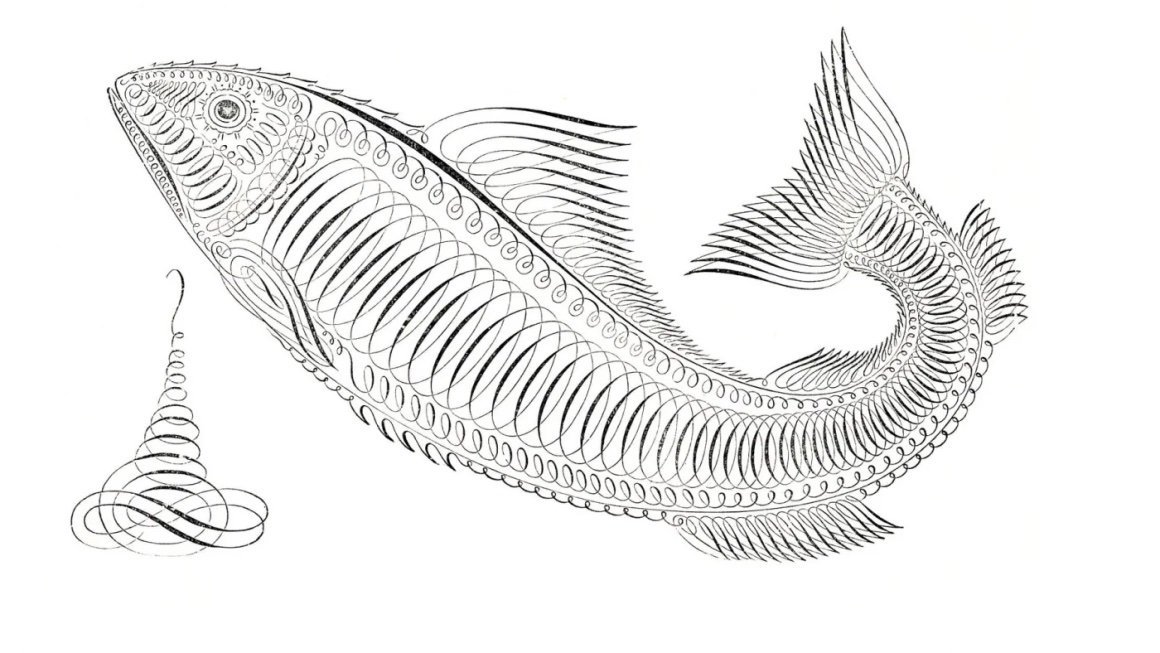
Spring 2020 Contest Runner Up in Poetry: Starr Davis
My sister climbed into bed with me, her body is full of milk and water and a baby inside her stomach that she doesn’t want.
She is 17, and I am 14 and baby is 86 days of fluid and fantasy
Spring 2020 Contest Runner Up in Poetry: Meetra Javed
You took the cloth and washed my body,
whispered every grace,
“Alhamdulillah, She lived a good life.”
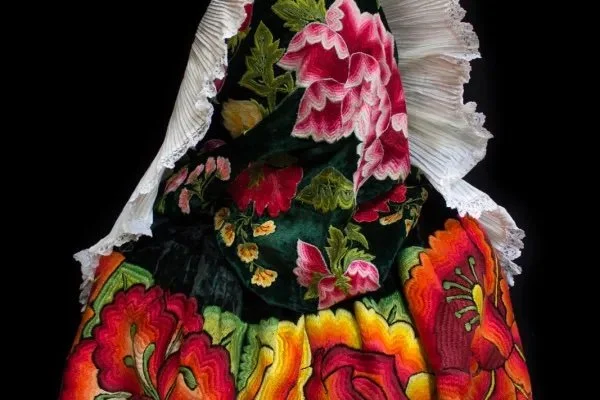
Spring Contest Runner Up in Nonfiction: Gringos
People always asked what we were doing there. The rehearsed line I said when people asked was, “We’re expatriates.” In my eight-year-old mind this word that came out like scrap metal meant, “white-people permanently not in white-people land.” That was the only way I had ever heard it applied. I knew I wasn’t Mexican. I didn’t consider myself American. Most of our friends, though fluent in Spanish, were other white people from English-speaking countries. They too were expatriates.
Review: Synthesizing Gravity by Kay Ryan
Although Kay Ryan has earned nearly every accolade a poet can dream of—Pulitzer Prize winner, Guggenheim Fellow, National Humanities Medal recipient, and Poet Laureate of the United States, to name a few—Synthesizing Gravity is her first collected work of prose. The title comes from her commentary on Portuguese writer Fernando Pessoa’s poems: “They must synthesize gravity, direction, time, substance. They can’t use anyone else’s.” This idea feels both essential and antithetical to Ryan’s selected prose, where her unique style so often comes out of commenting on the work of others.
Maximum Compound: Girl World / Lucy
My niece said, “Grandpa! Did you get to meet Aunt Lucy’s girlfriend? Do they kiss a lot?”—Lucy Weems, Inmate #922870C
Music, emotion and group translation: an interview with Terry Ehret, John Johnson and Nancy J. Morales
Poet, essayist, and translator Ulalume González de León believed that “Everything has already been said,” and, thus, that each act of creation is a rewriting, reshuffling, and reconstructing of one great work. For this reason, she chose the title Plagios (Plagiarisms) for her book of collected poems. Nobel Laureate Octavio Paz called Ulalume González de León “the best Mexicana poet since Sor Juana Inés de la Cruz,” recognizing the visionary quality of her work.
Review: The Illness Lesson by Clare Beams
Recently, a political candidate was put on the spot in an interview with a question. It’s a question that has plagued us—as Clare Beams demonstrates in her debut novel The Illness Lesson—for a long time, one that hinges on the inherent believability of women’s stories. The interviewer asked, rather dismissively, about a woman who alleged she’d been discriminated against while pregnant. With telltale condescension, he wondered why we should believe this woman’s story.
Animal Instincts
“Maybe we should run away.”
I stop cutting carrots into tiny squares. I scan my husband, trying to spot any signs of crazy or burnout, as he is normally abnormally logical. I see that his tie is off; it lies quietly a top the back of his chair and his shirt buttons are undone at the top but not haphazardly so. His shoes are on the right feet. I ask him what he means in a way that does not give away my concern. In reply he jabs his phone into the air between us and gives me two words, presented as though they were gifts. I take his phone, the screen of which is alive with letters. I read while the carrots dry out on the bench. “It’s mad.” I say when I am done, and he agrees but we keep quoting the article to each other until we get into bed. Then it is quiet save for the clicking of the pipes and the two of us thinking together.
Delusion: A short story by Ibrahim N. Al-Huraiyes translated from the Arabic
He threw the pen aside and collapsed onto the lumpy chair, resting his aching body. Dazed, he silently stared into the distance. Last Monday, a strange ethereal shadow had appeared out of nowhere, settled over his head, and loomed over him ever since. He was able to bat it away, sometimes, but it still peeked out at him from time to time, and he felt as though it might engulf him, all of him, at any moment. Strangely enough, he could not discern what it was or fathom its nature; he didn’t know why this specter had invaded his body and soul. He winced at its presence, his face contorting with both misery and dread. Every time the shadow overtook him, he felt overwhelmed by deep confusion and dejection.
Review: Wow, No Thank You. by Samantha Irby
In her latest collection of essays, Wow, No Thank You., Samantha Irby details life now that she’s forty, married, and living in the Midwest with her wife. Though (spoiler alert) depression has followed her from Chicago, Irby’s collection shows a little more vulnerability and a little less deflection than her previous books. She has a way of making you feel close to her. Despite proclaiming that much of her work (including her previous books Meaty and We Are Never Meeting in Real Life) has been primarily “about butts,” Irby delivers essays in Wow, No Thank You that are pithy, laugh-until-you-bend-over-funny and insightful.
Red’s Shrewdness
“Silence is so accurate.”—Mark Rothko
That winter when winter was thick as a knot, Rothko sat
sluggish in long-johns and warm black

Womxn’s History Month Special Issue Poetry Winner: Poems by Winniebell Xinyu Zong
By Winniebell Xinyu Zong
Womxn’s History Month Special Issue Poetry Runner Up: “Claiming Honey”
My mother knows how
to choose the best: the ones
with smooth pale skin.
Review: Bird Summons by Leila Aboulela
In Bird Summons, by Leila Aboulela, three Muslim women in three fragile marriages take a vacation to a remote loch in Scotland, with the intention of visiting a Scottish convert’s grave site. Each of the women wants to change her life, but they are all afraid of the costs of releasing themselves from the responsibilities and burdens to which they are tied. Moni devotes her life to her disabled son, at the expense of her marriage and her own work. Salma idly considers cheating on David, her husband of more than twenty years, with an old flame. And Iman, the youngest, finds herself freshly divorced for the third time and craves independence from men.
Womxn’s History Month Special Issue Poetry Runner-Up: “The Washing Society”
The Washerwomen’s strike is assuming vast proportions and despite the apparent independence of the white people, is causing quite an inconvenience among our citizens….There are some families in Atlanta who have been unable to have any washing done for more than two weeks.
—Atlanta Constitution, 26 July 1881
Womxn’s History Month Special Issue Nonfiction Runner Up: The Flight of the Heavenly Bodies
Two days after I watched Pan’s Labyrinth and practiced self-awareness with Meshkov, my spiritual guru, I was walking down Marshal Zhukov Street and sniffing my hand—every finger, my palm, and even nails—but for nothing. There was no smell. That didn’t stop me. I treaded towards the crowd gathered around an office building. Some of them were smoking. As soon as I passed them and the air was clear again, I sniffed my shoulder and the upper part of my arm. Nothing.
Womxn’s History Month Special Issue Nonfiction Runner Up: Not Napping
The woods were a kaleidoscope of women. Tall, rangy women with muscled arms in cut offs. Women with mohawks in their best butch leather get-ups. Women cutting onions and serving veggie burritos, women hanging off the back of beat-up pick-up trucks as they made recycling rounds, and women preparing to perform nightly under the moon and stars. Women sprinkled everywhere on the lush Michigan land that lay empty eleven months of the year. It’s hard to imagine anywhere else with a greater concentration of pheromones wafting through the air than here, in these ferns and forest. The Michigan Womyn’s Music Festival was the perfect place for romance – and sex.