
ISSUE 63 AND EARLIER
Published online prior to Sept. 2025
From the Archives: The US Election: a Timeless View from Abroad
As we face this fateful day, we are reminded of this poignant article from around this time four years ago. The U.S. elections can be time markers, moments for hope, failures in democracy, and to many around the world, a strange, emotional show. Whatever the outcome, stay safe and keep reading.
My Brother’s Peace Keeper
The other day, I texted my stepbrother for the first time in months—our relationship was one of the many that has been irreparably altered by the current political climate.
Readings and Conversation about the Stylistic Multitudes in Galina Rymbu’s Poetry and Life in Space
On October 17, 2020, Globus Books, an indie store that specializes in bringing Russian literature to the Bay Area and the wider country, hosted a live event to present Galina Ryumbu’s new book of poetry, Life in Space in English translation, translated by Joan Brooks and others, and forwarded by Eugene Ostashevsky, forthcoming from Ugly Duckling Presse in November 2020. It is Rymbu’s first full-length poetry collection to be translated into English and includes poems from her three previous collections as well as new work. The book includes additional material translated by Helena Kernan, Charles Bernstein, Kevin M.F. Platt, Anastasiya Osipova, and others.
Review: The Lightness by Emily Temple
I felt many things as I read The Lightness, which is probably why I’m typing out this review a mere six hours after putting down the book. Generally, I’d let a book marinate. I’d let my mind soak in the words, the narrative, and the pages. Normally, I’d emerge slowly from the world of fiction, reluctantly type out a review, and then return to a world that’s achingly real. But with this book, I have mixed feelings. Feelings that I may forget if I soak for too long. So I’m emerging from the pages and deep-diving into my brain here.
Three Poems by Abraham Sutzkever Translated from the Yiddish
The following poems are taken from Abraham Sutzkever’s collection, Poems from My Diary. Like many of the poems in the Diary, the selected works concern nature, as well as friendship and neighborliness.
Casualty
Aman is, by all medical and anecdotal accounts, dying. He is suffering primary, secondary, and quaternary injuries including, but not limited to, pulmonary barotrauma, mesenteric shearing, and penetrating ballistic gastrointestinal perforation, which is to say that blood is leaking, syrup-thick, from his abdomen, fully destroying his Cambridge University t-shirt and the waistband of his pajama pants. As a British Panavia Tornado warplane careens overhead, the irony of his extraordinarily British alma mater is not lost on him.
A Conversation with Viet Thanh Nguyen
Jinwoo Chong, online editor at Columbia Journal, spoke with Pulitzer Prize-winning writer Viet Thanh Nguyen, author of The Sympathizer, The Refugees, Nothing Ever Dies: Vietnam and The Memory of War, and Race and Resistance: Literature and Politics in Asian America, and the fiction judge of the 2020 Columbia Journal Winter Contest.
Review: Life of the Party by Tea Hacic-Vlahovic
An elaborate disappearing act, Tea Hacic-Vlahovic’s novel Life of the Party (Clash Books) plots a young woman’s debaucherous romp through Milan’s high society as she acclimates her existing problems to a new milieu saturated by the fashion world and its attendant vices.
North
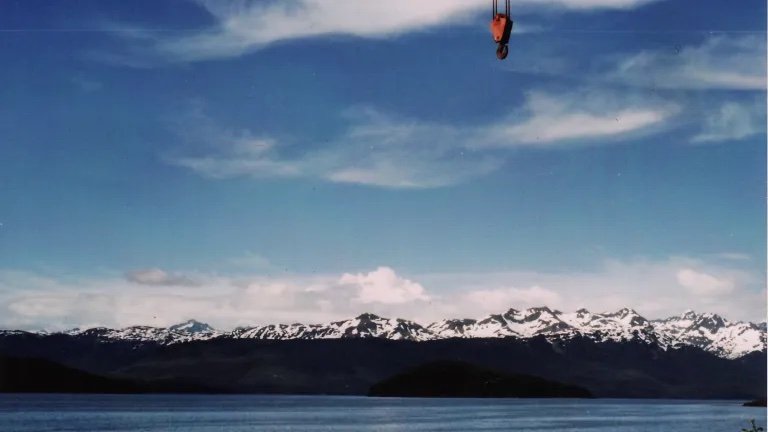
Joe had a sturdy mustache and a firm handshake. He didn’t say much to us at the airport, just loaded us into the back of his flatbed truck and gunned it. As he picked up speed, the wind cooled and whipped my hippy hair against my face. Fifteen minutes later, we were parked at the docks.

Three Poems by Manouchehr Atashi and Mohammad Biabani Translated from the Persian
The white wild horse
Conceitedly stood at the stall
Contemplating the wretched chest of plains

Words Apart
There was a corner of blue in Bastian’s otherwise brown eyes, a touch from his father, he told me. He was handsome, a young carpenter from Paris spending a summer in Seattle. With dark curls and a broad forehead, he had an eternal five o’clock shadow that felt like sandpaper against my palm, or according to the French, like a piece of toast – rasé avec une biscotte. Toast or sandpaper, I loved watching the creases of his face break into a boyish smile.
Three Poems by Pamela Proietti Translated from the Italian
The first day
is a memory unlived. A series,
confused slides in an archive.
Wentworth
Wentworth sat alone in his apartment on New Year’s Eve, daydreaming about a reading party held in honor of his debut novel, which in reality remained unfinished. The well-dressed guests sipping coffee and cognac, the dimly lit library with mahogany chairs and velvet cushions, the floor-to-ceiling bookshelf walls; it was a magical scene. He allowed these images to take hold of him as though for the first time, when in fact they had played out in his mind before, like a film on repeat.
Eco-Horror, Motherhood, and the Creative Process: An Interview With Diane Cook
Leyton Cassidy, Podcast Editor for the Columbia Journal, sat down with Diane Cook to discuss her debut novel, The New Wilderness, as well as her writing process, relationship with nature, and the religion of writing. The New Wilderness takes place in the near future, where a group of people have elected to live in what remains of a protected wilderness area. The reader follows Bea and her daughter as they struggle to connect, thrive, and simply make it through to the next sunrise. Since its July release, The New Wilderness has already been shortlisted for the 2020 Booker Prize. Cook is also the author of a collection of short stories, Man V. Nature, which has received worldly recognition.
Review: Friends and Strangers by J. Courtney Sullivan
Familiar facets of our modern existence—the kinds of things that trend on Twitter—loom large in Friends and Strangers, the fifth novel from J. Courtney Sullivan, out this summer from Knopf. It follows Elisabeth, a New York writer displaced in the suburbs with her husband and newborn son, and Sam, a college student Elisabeth hires as a babysitter. Swirling around them are such attractions as a student rally against unequal pay for university workers, tiffs and tussles within a popular mommy Facebook blog, a social influencer chasing bikini-brand deals, and a book idea decrying the loss of the American identity. It’s a novel that reminds you just how hyper-aware the world has become since, say, the early 2010s—the war between genders, races, classes—and yet never loses sight of its timeless keystone: the strength of the bonds built by women, between women. This, coupled with the trials of stale love, and a fair few lies and secrets, comes together in a story that, at the heart of its 400-something pages, chips away at the stunning intimacy we can sometimes share with strangers.
A Deconstruction of ‘Some Girls Walk Into The Country They Are From’ with the Translation Editors
“In Sawako Nakayasu’s first poetry collection in seven years, an unsettling diaspora of “girls” is deployed as poetic form, as reclamation of diminutive pseudo-slur, and a characters that take up residence between the think border zones of language, culture, and shifting identity. Written in response to Nakayasu’s 2017 return to the US, this maximalist collection invites us to reexamine our own complicity in reinforcing conventions, literary and otherwise. The book radicalizes notions of “translation” as both process and product, running a kind of linguistic interference that is intimate, feminist, mordant and jagged” Wave Books stated in their press release.
I Want My Mom
I want my mom. I do. I may be thirty-five years old—too old for wanting mothers—but I’m also thirty-five weeks pregnant. And I’m scared, I guess.
An Aimless Traveler Might Find Something
I stepped off a plane in Dar es Salaam, an energetic twenty-year-old in search of total transformation. I didn’t yet know that Tanzania’s commercial capital, nicknamed Bongo, was a fast-paced city where you had to use your brains to survive. All I knew was that it was home to a relatively affordable Swahili program at the nation’s oldest university. When my mother saw the pictures of the harbor in my guidebook, she gasped and said, “It looks downright Dickensian.” I hadn’t read Dickens yet, so I asked her what she meant. “Teeming,” she said. Going into my eight-week course, what I lacked in street smarts I made up for with an exceptionally hopeful heart.
Announcing the Shortlist: Special Issue on Uprising
We are grateful to the contributions of over 500 writers and artists producing around the word of our choosing: Uprising.
Review: The Sprawl by Jason Diamond
In The Sprawl: Reconsidering the Weird American Suburbs, writer and journalist Jason Diamond, author of the memoir Searching for John Hughes, returns to the suburbs of his childhood and adolescence in an attempt to better understand their impact on American culture. From a distance of time and space, Diamond considers the suburb as both concept and place, an in-between defined in relation to the urban center—a place which, linguistically if not physically, lies “beneath” the city. Diamond’s gaze, astute and compelling, is critical not only of the object of its inquiry but also of itself—of the hesitant, intricate love we have for the places that shaped us.