
ISSUE 63 AND EARLIER
Published online prior to Sept. 2025


Forms of Obsession
These paintings are about touch. The forms are diagrammatic and bodily, internal and external, and capsules or cross-sections. These paintings need to come together in one day, a record of a specific time and a sustained focus.
A Conversation with Kristen Arnett
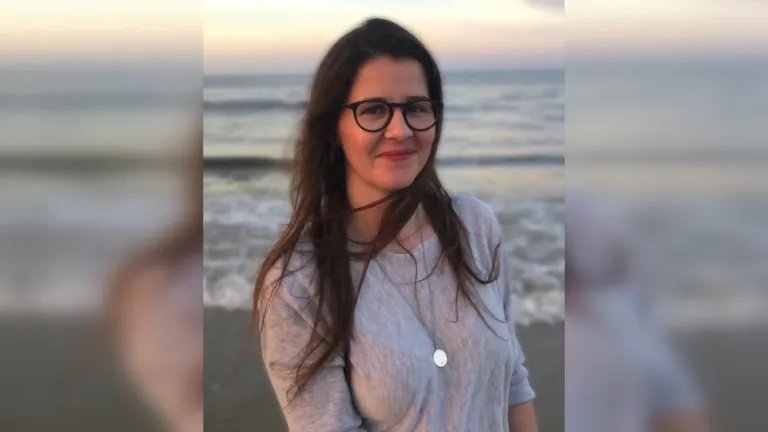
Victoria Rucinski, online fiction editor at Columbia Journal, spoke with New York Times bestselling author Kristen Arnett, writer of the debut novel, Mostly Dead Things, upcoming novel, With Teeth, and the fiction judge of the 2021 Columbia Journal Spring Contest.

Announcing Columbia Journal Issue 59
The editors at Columbia Journal are delighted to announce the new print issue of Columbia: A Journal of Literature and Art. Columbia Journal’s Issue 59 features work by Ada Limón, Tao Lin, Tea Hacic-Vlahovic, K-Ming Chang, Yuji Agematsu, Joshua Wheeler and more.

Exactly So
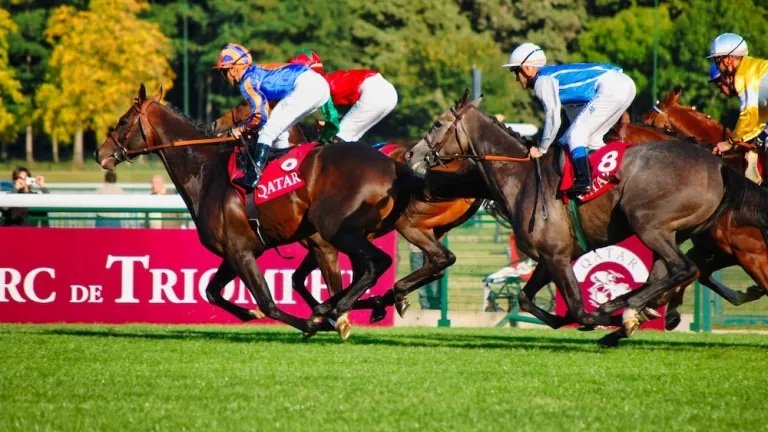
We went to the track before I went to camp. Every summer I shipped out to a Jewish camp on a lake, had my Jewish friends, my Jewish life, my Jewish girl, Talia. At home, we were unreligious. If anything, we were a little Christian, with the tree in December, the egg hunt in April, the Eggos. We were one of the few Jewish families in town and rather than the scarcity bringing us closer, it brought us a certain spiritual sleepiness. My going to camp every summer was our most Jewish tradition. This would be my last year as counsellor. My mother suggested that I spend some quality time with my brother before I left. I wouldn’t see him for six glorious weeks. I was eager for this reprieve. It was the only time I felt like I got free from myself. I was ready to appease my parents in any way, lest they keep me home. When I asked Alex what he wanted to do, he told me: the track.

Feeding the Poetic Demon with Douglas Kearney
If crossing Dionysian boundaries is true poetry, then no one makes the poetry demon swoon like Douglas Kearney does. Kearney is a star-studded poet, performer, and librettist. Accolades include a Whiting Award and fellowships from Cave Canem and the Rauschenberg Foundation. Kearney has published six collections, including Buck Studies (Fence Books, 2016), Someone Took They Tongues (Subito, 2016), and Mess and Mess and (Noemi Press 2015). His latest poetry collection, Sho (Wave Books, April 2021), provides a kaleidoscope of splintered selves and voices. In Sho, the speakers of Kearney’s poems are at once the antagonistic tricksters who enchant you (“I aspire to be a CVS: Lord”) and at once the documenters of historical and current wrongs (“Black wench! Clipped finches’/ shrill in brass lattice.”)

Retail Paper
A leaf placed upon the vase
lost from leaves. I turn
the corner to a thudding car lost
in the blank street of soft pleats.
Lost in shedded winter down.

Egghead Watch: High And Low, A Case For The Other Akira Kurosawa Film
My senior year English teacher showed me the wrong movie directed by Akira Kurosawa, Rashomon. While Rashomon, a 1950 Academy Award-winning psychological classic, may bea well-assembled masterpiece that slowly reveals itself as a meditation on perspective and ultimate truth—for an insecure 17-year-old whose favorite movie was (is) Star Wars Episode III: Revenge of the Sith, Rashomon was a dreary, one-note, strangely acted “snooze-fest” that lacked relatability to the world I was living in.

Poems by Luciana Jazmín Coronado and Verónica González Arredondo Translated From The Spanish
I pricked her lips with the pin
she remained anesthetized
sleeping at my father’s side
The Linebacker
In high school, he was one of three linebackers. All three wore good names on their backs. Sword. Seabolt. King. Strong side. Middle. Weak. Being part of a triumvirate meant something to him. They didn’t win all their games but were second in the state of Texas senior year. He got an offer to play in college—a D3 in Kansas, but still.

Good Night, and Good Cluck
On a gloomy spring evening, only one chicken returned home on schedule. No need to count heads. At this point, we had just three left, the others picked off one at a time like an Agatha Christie novel. I kept calling out in my usual way.

Rolling Junkyard Series
The images in the Rolling Junkyard Series are composed by manually layering 35mm color slide film of materials found at recycling collection facilities in the South Korean countryside. Using this method, the overexposed areas of the film are then brought into proper density, and the underexposed areas create super-dense areas of color. Thus, the majority of the frames used in the project would be otherwise considered “mistakes” prior to layering

A Glimpse of Abundance
The roadside marquee caught my eye in the summer of 1979. With its black silhouette of tiny legs kicked up, it promised a break from responsibilities engulfing me. At 26, I’d recently ended a marriage launched just days after passing my driver’s license test at 16. Although by now I was a mother of two young sons, the boys had recently decided to live with their father for a while. Suddenly, a newfound sense of possibilities shimmered around the edges of my swamp of anger at an unfaithful husband yoked to a pervasive sorrow over an end to my happily-ever-after dream.

I am hoping you find her
Chancey learned about the missing neighbor girl from the flyers stuffed in her mailbox. They were written in the kind of English she understood best: basic, with pictures. The girl’s name was Amal; she’d recently turned six; and, in the up-close photo, Chancey made out thick, dark eyelashes that framed enormous brown eyes. She stuck the flyer to her family’s refrigerator.

Review: Milk Fed by Melissa Broder
“She thought of people she had seen holding hands in movies, and why shouldn’t she and Carol?” This question, from Patricia Highsmith’s 1952 lesbian romance The Price of Salt, is related from the perspective of Therese, a shopgirl and aspiring set designer who has fallen in love with the wealthy, mysterious Carol. Nearly seven decades and a social revolution later, a similar question is posed in Melissa Broder’s Milk Fed, as the novel’s narrator, Rachel, sits in a Los Angeles movie theater with her love interest, Miriam. “What about holding hands in a movie theater? Can girls hold hands in a movie theater?” Rachel asks, probing, in bad faith, the strictures of Miriam’s Orthodox Jewish religion. After an agonizingly long pause, Miriam says yes, and what follows is a sequence of actions so libidinally charged that it leaves Rachel physically sick with desire.

Review: Love and Other Poems by Alex Dimitrov
So much of art, if not all of it, is about love. Every movie with their lovestruck leads. Each song’s lyrical strings stemming from the heart. It is a subject as predictable as it is inevitable, especially in poetry, an artform delineated by roses that are red and comparisons to summer days. Any attempt to avoid love, be it through loneliness, politics, or an appeal to the metaphysical, finds its way back inside a speaker, a desire. In this era of rapid innovation, where difference is valued above deference, love will always thwart our attempt to quantify the ineffable— those moments that, when experienced, leave no specific conscious impression, but instead, a sensation, a feeling that lingers with us forever.

Egghead Watch: Living with A Serious Man’s Uncertainty Principle
On November 2, on the eve of the 2020 Presidential Election, a tweet went viral. It was a picture of the electoral map, noting each state’s obtainable votes—though rather than shaded red or blue, they were all colored a light teal, overlaid with a photo of Fred Melamed from the film A Serious Man, flashing his quixotic grin. The caption read: “And the winner is…Sy Ableman???”

Memory, Baking, and Punk: An Interview with Hanif Abdurraqib
Sylvia Gindick, online poetry editor at the Columbia Journal, spoke with Spring Contest poetry judge, Hanif Addurraqib, to discuss exploratory practices of baking and poetry, the complications of memory and place, the responsibility of the witness, and a writer’s relationship to trust. Abdurraqib, a poet, essayist, and cultural critic from Columbus, Ohio, is the award-winning and bestselling author of The Crown Ain’t Worth Much (Button Poetry 2016), Vintage Sadness (Big Lucks 2017), They Can’t Kill Us Until They Kill Us (Two Dollar Radio 2017), Go Ahead In The Rain: Notes To A Tribe Called Quest (University of Texas press 2019), and A Fortune For Your Disaster (Tin House 2019). In March 2021, he will release the book A Little Devil In America with Random House.

ICYMI: Say Translation is Art with Sawako Nakayasu, Susan Bernofsky, and Lynn Xu
How can we look at translation as art? How can a translator develop their own relationship and mode of translation based on their aspirations? What can translation simultaneously encompass and transcend?