
ISSUE 63 AND EARLIER
Published online prior to Sept. 2025
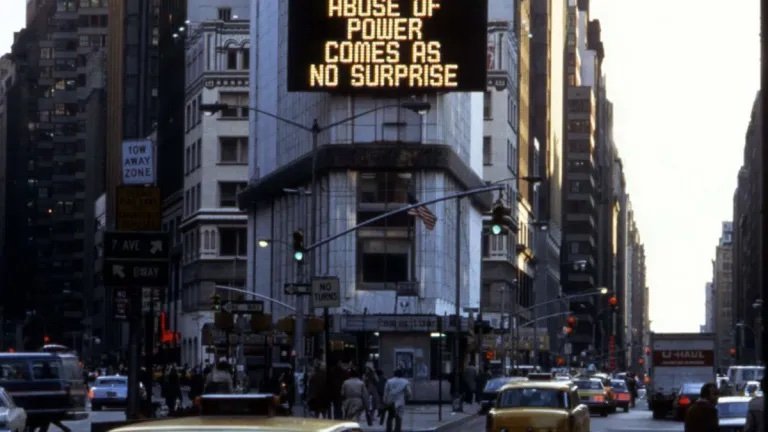
On Striking, Solidarity, and Jumpsuits
I wear a lot of jumpsuits. They’re warm, chic, easy—a complete outfit when you’re too depressed to think too hard about what to wear. For those saying it’s an adult onesie, you’re right and you should say it. My best friend — an Indigenous trans poet, social work student, lifelong activist and the most fashion-forward person I know — has had several discussions with me about how a blue-collar worker’s garb was appropriated as street fashion. On my end, the fit is bold, well-cut, and practical. It’s only ever a problem when you have to use the bathroom.

Gloves
The light shifts evening blue through the blinds, striping Daddy’s figure. For once, the TV is off. The one-eyed cat I had thrown into the river is in his lap and he pets it softly. I go over to them and crouch, the cat’s lips curled back. His gums are anemic, pale pink. His bulging, blind eye is crusted around the edges, like it’s the only thing holding it in place.
60 for 60: Reflections on Myth
A true gem from the archive: acclaimed comic book creator and author, Neil Gaiman, writing on the power of myth in the thirty-first issue of Columbia Journal, from 1999, a few years before Gaiman published his masterful American Gods in 2001. It is so special to see the germination of ideas here that would later populate that novel—why we need myths, what myths can tell us about the people who create them, how a story shifts with each retelling.
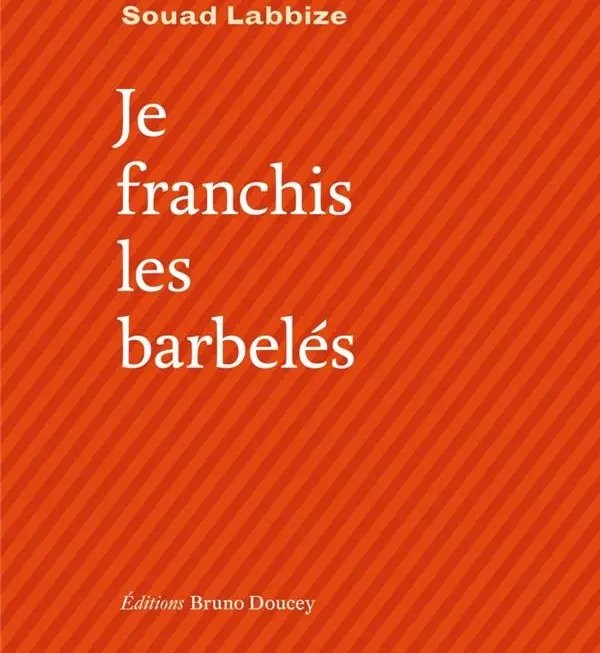
Poetry Excerpts from Bindle of Exile by Souad Labbize
Don’t count on
my small balcony
in this humid weather

60 for 60: The Magician’s Assistant’s Dream
One of our Editors’ Fiction Award Winners in 1987 was none other than Ann Patchett, whose book of essays, These Precious Days, came out earlier this week. In our interview with Patchett about her new book, Patchett talks about how the unpredictable moments in life—for instance, a friend’s daughter’s desire for a typewriter and the opportune existence of Patchett’s husband’s spare one—are what often inspires her to write essays. It seems like this idea of surprise is key to how Patchett constructs her narratives and certainly in her short story “The Magician’s Assistant’s Dream” from our twelfth issue.

60 for 60: Agreement
Published in the thirty-fourth issue of Columbia Journal, “Agreement” by poet Kay Ryan is as deceptive as it is delicious. Ryan’s ease with sound and rhythm lulls the reader into first considering the poem as simple as a piece of candy. Form reflects content, heightening the impact of what is being said; the em dash dramatizes “sugar,” the unusual break on “the” in the fourth line demonstrates a structural melting, and “granular” evolving into “syrup” in the same line embodies the physical transformation. The ultimate line, set alone as it is, comes as a shock. While flat-toned and truthful, it functions as a wry accusation that opens multiple lines of inquiry. Does agreement seduce? Is agreement a concession, or could it be a moral choice? If “many prefer it,” what is implied about those who don’t? Given the time of the poem’s publishing in 2001, I can’t help but wonder if the political atmosphere following the 9/11 attacks influenced Ryan’s writing. Regardless, these eight distilled lines remain provocative.

One Poem by Gala Mukomolova
Why do immigrants love America
so much? Tennessee asks, who
took his name from his homeland.

A Conversation with Ann Patchett
In Ann Patchett’s most recent essay collection, These Previous Days, her attention to memory invites readers to explore what it means to be seen as “our best and most complete selves.” The collection hosts practical advice on clearing out clutter (“How to Practice”), meditations on the publishing process (“To the Doghouse”), and intimate musings on marriage (“Flight Plan”). Throughout, Patchett calls for an embrace of life’s unpredictability and brings forth the brilliance that can be found in such imperfection. Writer Yvonne Conza spoke with the author recently about time, losing a friend, and putting life in order.

Excerpts from Pedro Carmona-Alvarez’s Inventarium
There was the sea, we had finally arrived
at its beach covered in rushes, so much wind
where we stood, we watched a sea eagle

60 for 60: The Poet’s Task
I love Alfred Corn’s translation of Pablo Neruda’s “The Poet’s Task” from Spanish to English, which was published in the twelfth issue of Columbia Journal in 1987.

60 for 60: Children with Hangovers
“The nosy neighbor is not an urban figure,” insists author Fran Lebowitz in Public Speaking, the 2010 documentary about her life directed by Martin Scorsese. I recalled this riff as I read “Children with Hangovers,” a short story by Jonathan Lethem originally published in the fortieth issue of Columbia Journal (October 2004).
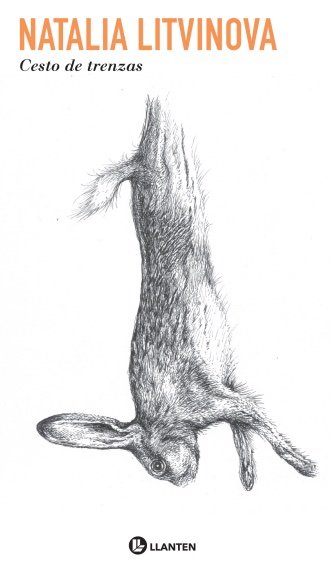
5 Poems from Basket of Braids by Natalia Litvinova
with a man
on the other side of the forest
is to live out the mystery,

60 for 60: Autobiography of Red
In 1994, Columbia Journal published an early rendition of Anne Carson’s Autobiography of Red before the piece found its form as a novel-in-verse and was published four years later by Alfred A. Knopf with great praise. This story provides an invaluable window into Carson’s process. As a writer and a fairly indecisive one at that, I’m fascinated by where stories begin—as little specks in a writer’s mind to be swept together and arranged into coherence on the page—and where stories end up, often a distance away from their starting points.

60 for 60: Shore Leavings
One amazing thing about poetry is that it doesn’t have to make sense. Many of us spend our days working toward clarity, in our communications with one another, in our work, and we require it from most things we consume, be it the news or a podcast. Poetry exists in a space outside of this requirement. How liberatory!
![“Party 1-8” from Sexual Equilibrium of Money by MID [Mita Dimitrijević]](https://images.squarespace-cdn.com/content/v1/64078b07fc55bb62f3100e4e/e516e69e-672d-4096-bfc4-c03fc5266235/MID-Sexual-Equilibrium-of-Money-2.png.webp.jpeg)
“Party 1-8” from Sexual Equilibrium of Money by MID [Mita Dimitrijević]
One can and dare do with moncy (+) what one dare not, cannot do sexually (-). With goods, the "thing-in-itself" (+), the seen and unseen, one can evaluate a relationship; a calculation (-) by itself is not the end

60 for 60: evening and my dead once husband
I’ve always been tickled pink by the thought of séances. To call back the dead and learn what they have to tell us: what a marvelous thing, and what a frightening one. I’ve never participated in a séance, and I’m not really planning to: but it has been very funny seeing memes over the past (almost) two years proclaiming that Zoom meetings are our era’s séances.

60 for 60: Before the Burbank Reunion
In a few weeks, I will return to my childhood home for Thanksgiving. It will be the first time in years. The holiday is, despite its colonial underpinnings, a favorite of mine largely because I can’t think of another day when anyone can get away with having four to six kinds of pie for dessert. Still, this year, I have an inexplicable knot in my stomach whenever I consider my imminent return.

With Our Slingshots (Read Slowly Please) from small red women
We were from here, but also from elsewhere. We are the lost children and the dead women. God does not exist—we are proof of that—and down here we always wear a smile.

The Woman Rains
The rains come in the afternoon when the clouds clot like blood, flowing against one another, thunderheads swelling over the town in the heart of the forest. Men, jockeyed by adrenaline, yank out barrels to collect what is coming, cover sharp corners with blankets, drag mattresses over rocks and jagged edges and concrete. A shudder passes through their rugged bodies, a frenzied burst of voltage; they are used to the droughts, twelve months stretching, a muscle before it snaps, but they are slick with sweat today, running tongues over flaky lips. Always watching the sky, pacing in front of trucks or porches or front doors, places into which they can duck.

60 for 60: Iron Hans
As much of pop culture has been reminding us for a while now, fairy tales are quite a bit more irksome than Disney would have us suppose. And it is right that it be so. Disney’s The Little Mermaid remains an excellent piece of entertainment. But there’s something deeper and more moving in the original story’s tragic ending. Disney’s Cinderella is still enchanting; but when the Grimms’ wicked stepsisters’ eyes are pecked out by doves, there’s a satisfaction that is more than malice. Fairy tales ought to be ghastly: they are our myths, and no one likes an insipid demigod. And what better time to value one’s thirst for the gory than at the season of Halloween? (Or Hallowe’en, if you like.)