
The Doors of Bulgwangcheon: urban thresholds, returning birds, and ecological memory in Seoul
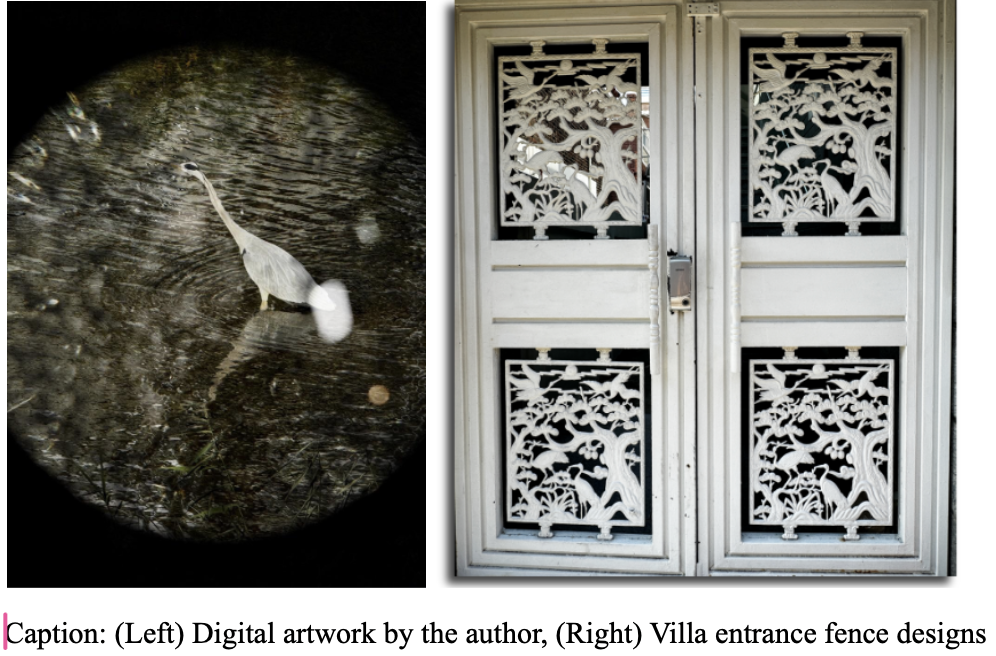
A Quiet Return
Along the banks of Bulgwangcheon, a modest urban stream tucked behind apartment blocks in northern Seoul, a quiet return is underway. Herons and egrets, once thought displaced by concrete and construction have begun to reappear. Their long-legged forms glide just above the water’s surface, pausing on flood barriers and stone edges. Their presence challenges the assumption that cities are purely human terrain.
These birds, once present mainly as decorative cranes etched into doors and gates, now roam the city in the flesh. They pass construction zones, glide over rooftops, and wade through engineered waterways. They coexist with us, not triumphantly, but in quiet persistence. Their return activates what I call ecological memory: a zone where symbolism, architecture, and migratory life intersect.
For the past two years, I have walked this stream daily, photographing birds and buildings alike. What caught my attention were also the entrance doors of multi-family homes built between the 1970s and 1990s, glass surfaces etched with images of cranes, pine trees, and clouds. These were not mere decorative touches. They reflected a now-fading symbolic language: a domestic cosmology where built space mirrored ecological longing. In these doors, the crane was more than a bird. It was a wish for peace, continuity, and grace.
Doors as Memory: An Everyday Cosmology
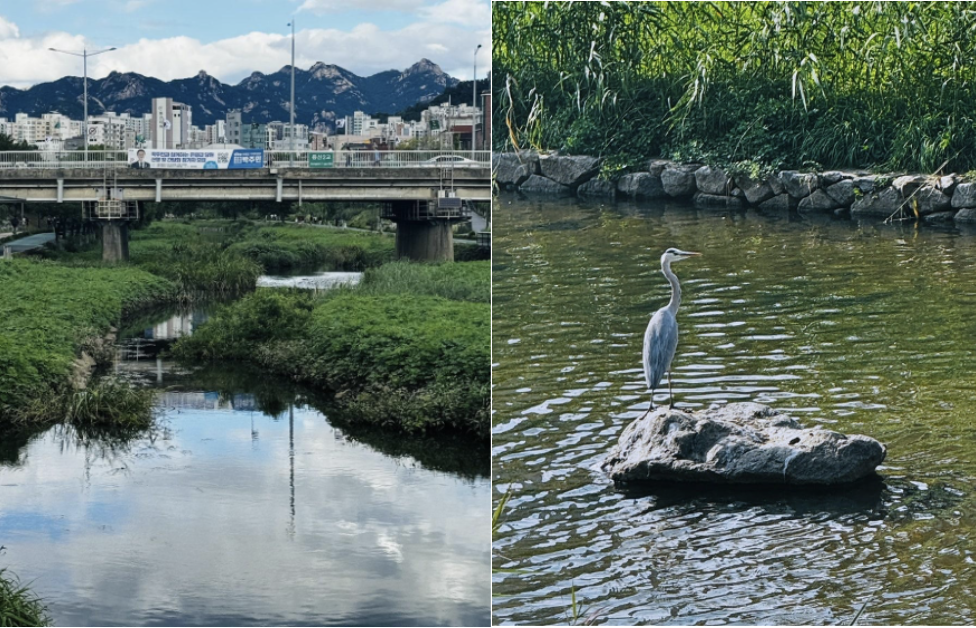
View from the alley near Bulgwangcheon.
I believe a city remembers itself through its doors, not through towers or landmarks, but through the hand-worn thresholds tucked into alleyways. The etched motifs of cranes, pine trees, and clouds once embodied the hopes of daily life.
A door is both boundary and passage. It connects and separates, shelters and reveals. The doors of Bulgwangcheon now stand as memorials. Many are fogged with renovation dust, or replaced by generic steel. Their symbolic language is vanishing. And yet, against this erasure the birds themselves have returned.
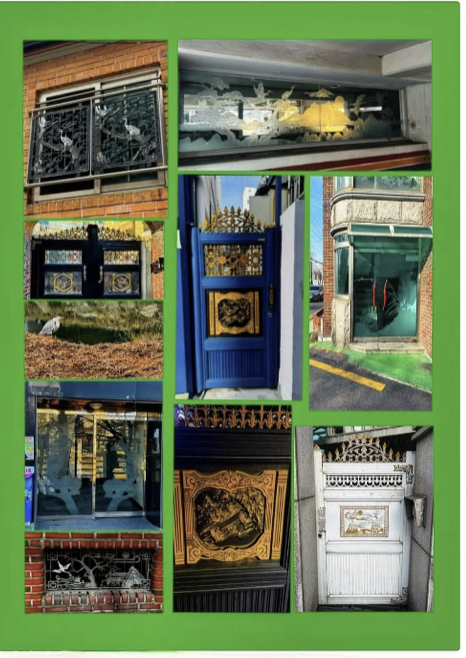
Villa entrance fence designs in the Eunpyeong-gu district of Seoul
Between the 1970s and 1990s, Seoul experienced a boom in villa-style apartments and multi-family housing. Many of these buildings featured doors engraved with symbolic motifs: cranes, pine trees, bamboo, clouds. These weren’t religious icons like stained glass. Rather, they offered a quiet, domestic worldview, one blending Confucian order with shamanic hope.
The crane stood for longevity and grace; the pine, endurance; bamboo uprightness and resilience; and clouds, an auspicious sense of balance between heaven and earth. These motifs conveyed hopes for balanced living and embedded values of endurance and grace. Seen daily at the threshold between home and world, they formed a subtle visual language, understood not through explanation, but repetition.
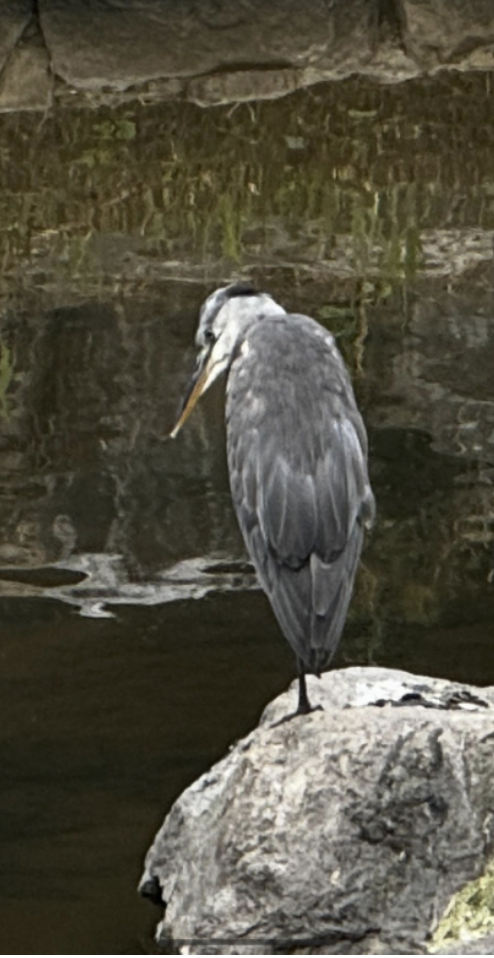
View from the alley near Bulgwangcheon.
Bulgwangcheon is more than a stream. It is a palimpsest of desires where water, infrastructure, birdsong, and forgotten symbols blur into one another. As the climate crisis and urban acceleration reshape our environments, such margins remind us to look again. To listen. To remember.
About the Author
Joonhee Myung (aka Junos) is a visual essayist working between Seoul and Santiago. Through photography, video, and text, she traces migration, urban ecology, and memory, often returning to birds, waterways, and overlooked architectural details as fragile carriers of history. Her ongoing series Nomadic Fluidity is forthcoming in print with Columbia Journal and her work appeared on the cover of Hindsight Journal. She studied Russian Language and Literature and Political Science and Diplomacy at Yonsei University. Instagram: @joonhee.myung
