
ISSUE 63 AND EARLIER
Published online prior to Sept. 2025

The Word Process: An Interview with Alexandra Kleeman
The Word Process is an interview series focusing on the writing process and aimed at illuminating the many ways that writers approach the same essential task. In this interview, 2019 Spring Contest fiction judge Alexandra Kleeman talks about the piece of petrified wood she keeps on her desk, why patience is key to craft, and the reason that the writing process should not be a place of comfort.
The 2019 Spring Contest is Now Open for Submissions
The editors are delighted to officially announce that the first-ever Columbia Journal Spring Contest is now open for submissions in poetry, fiction, and nonfiction. Our judges will be Alexandra Kleeman (fiction), Tommy Pico (poetry), and Kiese Laymon (nonfiction). The three winners of the Spring Contest will be published online on columbiajournal.org and will receive a cash prize of $250 each. At least three finalists will be selected and announced in each of the three genres in the spring. Submissions open today on Submittable, and the deadline to submit is February 15. There is a $10 entry fee for each submission. You can read the full contest guidelines and more about this year’s judges below.

My Barber Left New York City Before I Did
For nearly 10 years, my haircuts were cheap and they were good. To me, in fact, they were excellent. I got them from a barber named Gasper (from the Italian, Gaspare) in Williamsburg, Brooklyn. Most of the trips I took to Gasper’s came after I had moved out of the neighborhood to South Brooklyn. Other customers trekked further than me—from Hicksville, Long Island or from towns in New Jersey. Others had been customers for longer than my nine years. Some had gotten their hair cuts or shaves or shoulder massages (yes, he did shoulder massages with an old school, hand-held, vibrating machine) by Gasper for decades.
Review: Once Upon a River by Diane Setterfield
Once Upon A River arrived in my new, American mailbox mere days after my British visa expired. I spent the last three years living in London, and this book immediately transported me back to England, but not the England I know. It is not one of nightclubs and gentrification, but instead a gothic land pulled straight out of fairytales, where dragons are the topic of small talk and ghosts are commonplace, not debated. The inhabitants of this tale understand its logic, philosophizing at one point that ‘…just ‘cause a thing’s impossible don’t mean it can’t happen.’
12 Nonfiction Books We’re Excited About in 2019
With the start of 2019 comes a bevy of new books to explore. And while the list is overwhelmingly endless, we’ve done a little of the homework for you and selected a few nonfiction books we can’t wait to get our hands on. From works by icons like Toni Morrison, to debuts from rising stars like Jia Tolentino, 2019 has a little something for every type of nonfiction reader. Here are 12 forthcoming releases that have our nonfiction loving hearts all aflutter.
Canon Fodder: Catherine, Called Birdy by Karen Cushman
Canon Fodder is an ongoing series of essays where writers talk about the books they’ve held close relationships with in their lives and why those books deserve a second read by a broader literary audience.
Ideas Have No Smell: An Interview with M. Kasper
In this interview with fiction MFA candidate Sonya Gray Redi, M. Kasper discusses his translation process and how he went about creating facsimile-style translations of some of the ‘unacknowledged literary greats of the twentieth century,’ the Belgian surrealists Paul Nougé, Paul Colinet, and Louis Scutenaire, in his new work Ideas Have No Smell.
You Can’t Play It Safe: An Interview with Meghan Daum
In this interview, MFA nonfiction candidate Veronika Kelemen speaks with writer and Columbia professor Meghan Daum. Daum is the author of two collections of essays, My Misspent Youth and The Unspeakable: And Other Subjects of Discussion; a memoir, Life Would Be Perfect If I Lived In That House; and the novel The Quality of Life Report, and also edited the anthology Selfish, Shallow & Self-Absorbed: Sixteen Writers On The Decision Not To Have Kids. She is a 2015 Guggenheim Fellow and the recipient of the 2016 National Endowment for the Arts fellowship in creative writing.
Three Short Stories by Ryūnosuke Akutagawa, Translated from Japanese
These three stories by legendary writer Ryūnosuke Akutagawa were translated from the original Japanese by Ryan C.K. Choi.
Review: Language Is a Revolver For Two by Mario Montalbetti
Peruvian born poet and linguistics professor Mario Montalbetti’s latest collection of poetry Language Is a Revolver for Two showcases his incredible ability to use poetry to rhythmically unfold a prophecy to his reader. Throughout these fourteen poems, Montalbetti consistently uses the motif of movement, particularly its risings and fallings, as a way of tracking his exploration of language’s, and by extension, the world’s economy of supply and demand. Essentially delineating the reason that law cannot be fully applied to love: “one thing and only one thing affects love: / the demand for love. / … supply doesn’t affect love.”
Review: On Sunset by Kathryn Harrison
If a book is as strong as its strongest character, Kathryn Harrison’s On Sunset has the advantage of many to choose from: the grandmother— a British Jewish heiress of Baghdadi extraction, the kind and adventuresome grandfather who helped tame the wilds of the Alaskan wilderness before it became a state, the colorful Sassoon family who were known as the “Rockefellers of the East”, getting rich selling opium to the Chinese and selling futures in rubber plantations across Asia, eventually having fifty British, Chinese, and European servants to wait on a family of four.
Two Poems by Mary Ann Samyn
SNOWDROP
First flower, or nearly.
No one forces it to do anything.

The Revolution Is Not Currently on View: Notes on Art’s Political Futility
The world is rapt with chaos. Ascendant reactionary movements across the globe, largely motivated by overt racism and xenophobia, have disrupted the convenient narrative of uninterrupted social progress, melding the frustrations of a weakening, shrinking, and resentful middle class into anger and fear.
Review: No Budu Please by Wingston González
Reading No Budu Please is like committing to the excavation of the continual traumas that occur within a post-colonial consciousness that is paradoxically both foreign and too familiar.
From Solitaire to Solidarity
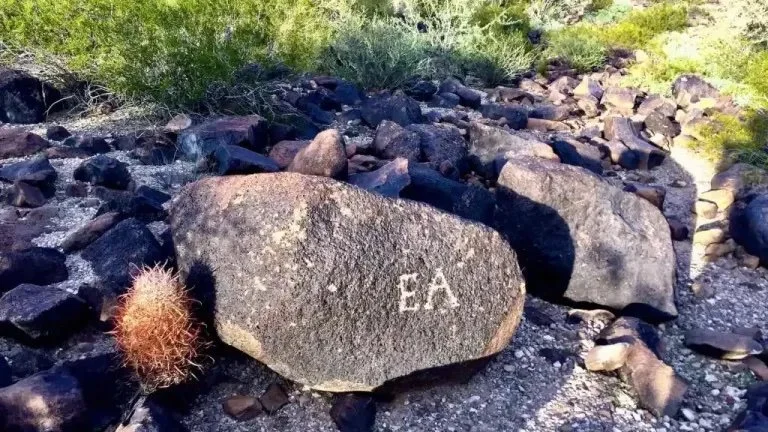
The day after Edward Abbey died, in the spring of 1989, his friends and family wrapped his body in a sleeping bag, packed it in dry ice, and loaded it into the bed of a blue Chevy pickup. They drove west out of Tucson, then south toward Mexico, cruising along the blacktop, then crunching dirt and rock as they chased the late-afternoon sun deep into the heart of the Sonoran Desert. There, amid the flat, alluvial basins and the ragged, looming ranges of the Cabeza Prieta Wildlife Refuge, somewhere just north of the borderline, in the brittlebush and creosote and ocotillo and saguaro stands, they committed Abbey’s body to the earth. They chiseled his epitaph into a slab of varnished basalt: “EDWARD PAUL ABBEY / 1927-1989 / ‘NO COMMENT.’”

Doe After the Lightning Storm
Red light, where you were when the strike struck-to
and split, singeing thusly the center, burning
Review: The Houseguest and Other Stories by Amparo Dávila
Reading Amparo Dávila’s stories is like accepting an invitation for tea at a haunted house. It starts out ordinary, mundane even, and before you know it, the key turns in the lock and you are trapped.
The Boardwalk
The deaths were coming more frequently now. It was almost a weekly expectation to learn, through an acquaintance, the phone, or even Facebook, of a new death. Friends and distant acquaintances died of cancer of the colon, breasts, prostate, bones, liver—it was almost always cancer. But also heart disease, lung disease, stroke, diabetes. Sometimes the death could be attributed to human error rather than a natural cause. A car accident, for example. Nonetheless, even these could usually be traced back to mistakes made by the human mind, dulling as it atrophied in old age. The ravages of time within the interior of our bodies, expressed through the degeneration or sudden demise of our exterior selves.

Review: Heartland by Sarah Smarsh
When I first picked up Sarah Smarsh’s book Heartland: A Memoir of Working Hard and Being Broke in the Richest Country on Earth, I expected to find a familiar story. Like Smarsh, I grew up in a rural farming community in America’s heartland. I knew the unceasing nature of work on a farm, though ours was just big enough to sustain my own family, and the weekly routine of clipping out coupons that determined which cereals you could buy at the grocery store that week.