
ISSUE 63 AND EARLIER
Published online prior to Sept. 2025
Ask the Editor: An Interview with Marisa Siegel of The Rumpus
As editor-in-chief of The Rumpus, Marisa Siegel manages one of the internet’s most original and exciting websites, a space that prioritizes bringing marginalized voices into the spotlight. To learn more about her career and her path, MFA nonfiction candidate Elena Sheppard spoke to Siegel about her MFA experience and the formative roles and work that led her to where she is today.
Review: Thick, And Other Essays by Tressie McMillan Cottom
In college, I failed an anthropology assignment on thick description, the concept from which Dr. Cottom takes her title. I had tried to write descriptively and engagingly, like the writing major I was, though in her comments on my piece, the professor essentially told me I had forgotten to do the assignment. I wrote descriptively — almost creatively — but not anthropologically. I was missing the sociocultural lens she had asked us to apply; I had failed to see the patterns in the patrons behavior, how they served (and didn’t serve) as a microcosm of something bigger.
Review: New Selected Poems by Thom Gunn
The collection New Selected Poems: Thom Gunn draws from the poet’s canon to commemorate one of the most profound members of a generation of English poets who came of age during and after World War II. An AIDS-era eulogist. A renegade Cambridge-cowboy. A devilish Brit writing from both the epicenter and the lava-outskirts of a shifting American landscape. In his lifetime, Gunn was often positioned as an incongruent peer to Ted Hughes and The Confessionals. Yet Gunn, by his own rhetoric, was not a confessional poet. As an expatriate, his work evokes an oozing liminality that is addressed in an interest in the body and masculinity—ranging from cowboys to Elvis. Poems set in iambic pentameter and formal rhyme schemes speak about motorcycle-clad emblems of a brazen American masculinity and layered with double-entendres on gay male sexuality. The most interesting moments in Gunn’s poetry occur with a metaphorical preoccupation with the intimacies between the interior and exterior self.
Canon Fodder: Dictée by Theresa Hak Kyung Cha
Canon Fodder is an ongoing series of essays where writers talk about the books they’ve held close relationships with in their lives and why those books deserve a second read by a broader literary audience. The first essay in the series looked at the young adult novel, Catherine, Called Birdy. The second discussed James Herlihy’s Midnight Cowboy.
Review: Beneath the Sleepless Tossing of the Planets by Makoto Ooka
A new edition of selected poems by Makoto Ooka, translated by Janine Beichman and entitled Beneath the Sleepless Tossing of the Planets, is a treasure chest for lovers of Japanese poetry and poetry in general. Ooka was one of the most revered poets and critics in Japan, and Beichman, is a masterful translator of Ooka’s work. This is the third anthology of Ooka’s poetry she has translated. Beichman captures the stark simplicity of Ooka’s language as well as the Western influences on his work. Ooka himself approved her translations, and he knew English poetry well. He even reciprocated by translating one of her Noh plays.

Emotion Congealed in Language: An Interview with Lisa Gornick
In this interview with nonfiction MFA candidate Sarah Rosenthal, author Lisa Gornick discusses her latest novel, The Peacock Feast, as well as writing about real historical figures in fiction, the many overlaps between writing and psychology, how design and architecture can inform the writing process, and much more.
I Don’t Think I’ll Be Here Much Longer
It’s the wrong exit, and I’m lost on my way
to Malibu Beach. I might not hear the freeway
if the car windows were up, but it’s hot,
Wulf & Eadwacer Translated from Old English
The poems below have been excerpted from a longer work called Wulf & Eadwacer, an experimental translation by M.L. Martin of the Anglo-Saxon poem “Wulf ond Eadwacer.” As Martin explains, “code-switching between the original Old English and Modern English, Wulf & Eadwacer embraces the proto-feminist, disjunctive voice of the original poem so that its enigmatic nature and plurality can fully be explored for the first time.”
Oogoo Poogoo
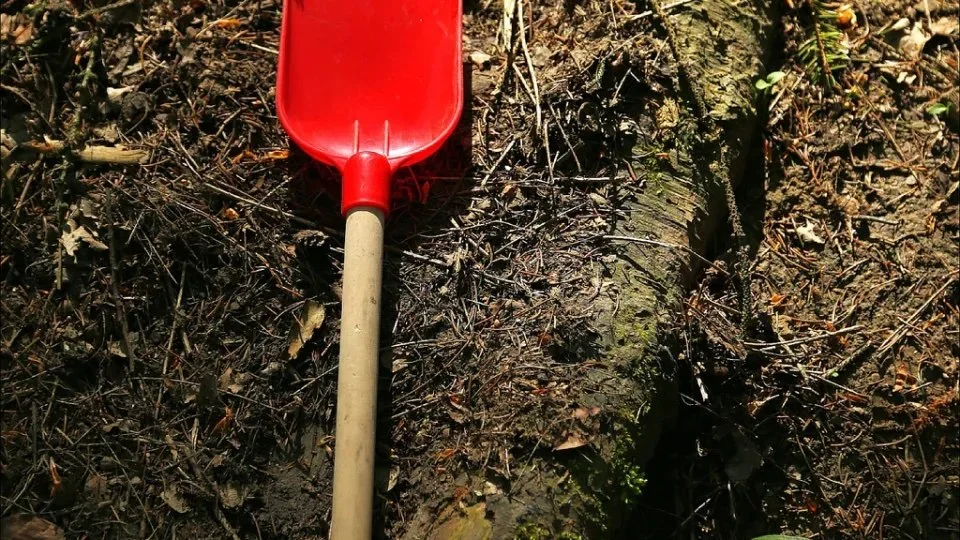
They were boys with big dreams of being doctors, and lawyers, and businessmen. Tonight, they were stuck in the sandbox digging for buried treasure. Oogoo Poogoo had the shovel. He was the youngest of them all. 18. Freshman at Oklahoma State, digging for buried treasure in the sandbox behind an abandoned elementary school. Where had he gone so wrong? Bid, Rush, Pledge, Frat. All of it a mistake. Now Oogoo Poogoo needed to find sixty-six cents in a child’s sandbox to make it into Theta Delt. If he could find it, he’s to save his spot in the fraternity.

Writing About Real People: An Interview with Briallen Hopper
In this interview, Charlee Dyroff talks to Briallen Hopper about her new essay collection, Hard to Love, out February 5, 2019. Hard to Love was named one of the most anticipated books of 2019 by both Lit Hub and The Millions.

Three Poems by Stella Díaz Varín Translated from Spanish
These poems by Chilean poet Stella Díaz Varín have been taken from her 1959 collection, ‘Time, Imaginary Measure,’ and have been translated from Spanish by Rebecca Levi.
More Interesting, Less Predictable: An Interview with Sam Lipsyte
In this interview, MFA fiction student Sophia Mansingh talks to writer and chair of the Columbia University fiction program Sam Lipsyte. Lipsyte is the bestselling author of Home Land; Venus Drive; The Fun Parts; and The Ask. He has also been published in The New Yorker, Tin House, The Washington Post, The Paris Review, and Playboy. He was a 2008 Guggenheim Fellow.
Four Poems by Cynthia Cruz
At dawn, after they drove me
by emergency to the hospital, or
the mansion on the outskirts of the city.
From City to City: An Interview with Cynthia Cruz
In conversation with Columbia Journal’s Online Poetry Editor Brian Wiora, the poet Cynthia Cruz, discusses Nomadism, the nature of dreams, and of course, her poetry. After reading this interview, we hope you will read a selection of her poems, published here.
Five Poems by Lidija Dimkovska Translated from Macedonian
These poems by Lidija Dimkovska have been translated from the original Macedonian by Ljubica Arsovska and Patricia Marsh.
A Complete Envelopment: An Interview With Chris Power
If hard writing makes for easy reading, the stories collected in Chris Power’s debut, Mothers, must have been hell for their author—who has made a public study of the form in his Guardian column since 2007. These stories exhibit a precision and clarity that seem effortless, much like his descriptions. Likewise, there is an accessibility to his themes, commensurate with the resonance of his imagery. Who has not observed a tree branch that “reached out…like a withered arm,” or stepped into a body of water to watch it “wrinkle at [their] ankles”? So it is with the difficulties faced by his protagonists. While mothers inform this work in myriad ways, the scope of this collection is in no way limited by this, at times indiscernible, motif. Narrators vary in age, sex, and orientation. But they all, in some way, fail to actualize their ambitions—particularly those concerning interpersonal relationships. Happiness may write white, but Chris Power doesn’t. Still, his masterful prose and incisive explorations of universal themes will delight anyone who purchases this collection.
Booksellers on the Books They’re Most Excited To Read in 2019
While the publishing process contains many vital roles to insure readers discover great books, no other job is quite as immediate as that of a bookseller. The best booksellers are not only dream readers for writers, but they are also interested in developing relationships— to customers, of course, but first and foremost to books themselves. Booksellers put the strange, the exciting, and the revelatory into our hands. Below are the books that beloved indie booksellers from across New York City are looking forward to in 2019.
Canon Fodder: Midnight Cowboy by James Leo Herlihy
Canon Fodder is an ongoing series of essays where writers talk about the books they’ve held close relationships with in their lives and why those books deserve a second read by a broader literary audience. The first essay in the series looked at the young adult novel, Catherine, Called Birdy.