
ISSUE 63 AND EARLIER
Published online prior to Sept. 2025

One Poem by Du Ya
Stranger, this is spring in my village:
from the very start, the east wind has opened every enclosure,
occupying each street corner and patio,
moving through the village locust trees to the fields beyond.

4 Poems by Farhanah Translated from the Indonesian
Too many voices, they puddle in the ear and the megaphone
stalks. The water’s cloudy, so much lost, sunk, floating,
turns into phone data parasite bacteria. The intricate road looks full
of intersections that form the wrinkles on your face.

One Poem by Yoysef Kerler
My epitaph is a wild plant that grows
in the kingdom of sadness and regret—
A smile slinks past like a fox
and is lost among gray stones.

Notes from Underground
She approaches me at a party. Tells me he handcuffed her to his dining table and left her there for ten hours. Said he’d thought she had the key. His mistake for forgetting to remove it from his breast pocket. Her eyes are the kind of green that makes you sorry to be looking for so long, matte and immovable. Not like mine. Gray and protean. There’s a distantness about her, surprising dispassion for someone as young as she is. She looks tired. She doesn’t cry or even flinch as she recounts this to me, as though explaining the plot of a movie she watched almost too long ago to recall the actor’s name. She takes a sip of her beer, offers me one. There’s a cooler on the stairs, she says. Just throw a few bucks in the cupholder. I thank her, but do not move right away. I stay in her placid stare, wanting something to happen, wanting for us to embrace one another, or break down. Isn’t that what we deserve? United by the same violent touch. But we aren’t sisters, nor are we friends, and in many ways our relation was for the longest time exclusively adversarial. Well, see you, I say. Yeah, she says. See you.

A Conversation with Chessy Normile
Madeleine Cravens, M.F.A. candidate in poetry, sat down with poet Chessy Normile on a stoop in Brooklyn to talk about humor, vulnerability, and revision. Normile’s debut collection, Great Exodus, Great Wall, Great Party, was awarded the 2020 APR/Honickman First Book Prize, judged by Li-Young Lee. This book’s poems are irreverent and highly intimate, drawing the reader in through topics such as the Bible, theories of time, and trauma. As Li-Young Lee writes in the introduction, Normile’s poems are “born of an imagination that is unpredictable, fearless, probing, self-questioning, and marked by the influence of a hidden wisdom some might consider folly.”

Next Time Won’t You Sing With Me
Abecedarian
Sure, why not? If I’m going to tell it, and I’m not at all sure that I am, why not wrap it in structure, cover it with metaphor, poetry, asides? Better to bury it deep behind the chest wall, the pectorals, the silicone implants that stand in for ducts and fat and lobules, the scarred-up skin. Tell it muffled, tell it crooked, whisper it into a thousand layers of hospital green cotton, bubble it up through a vat of Adriamycin®. Or not. Maybe best not to tell it at all.
Here You Go
Just so you’ll know: this doesn’t end with me doing the right thing. Why else would it stick with me for forty years? Who has the time, space, or inclination to remember one’s moral successes? Don’t, however, go into this expecting a thrilling tale. Complicit inaction is rarely thrilling, especially when there’s not a great deal at stake in the first place, as was the case here. But the same could be said for life in general—rarely thrilling, rarely much at stake. There are occasional moments, however, when we sense the ethical gravity of things a bit more than usual, moments when we feel our responsibilities to others a bit more keenly, even when the decisions we end up making don’t affect all that much. Perhaps we feel these things most when we know we’re doing our best to deny the choices available to us. The denying is what has stuck with me.


Tour Guide
After being incarcerated for nearly a decade, I have finally made it to a minimum-security facility. In the federal system, these facilities are referred to as camps, typically companion facilities to a United States Penitentiary. This dual-facility complex, U.S.P Lee and Camp Lee, is located in Virginia, wedged between southeast Kentucky and northeast Tennessee. The heart of Appalachia.

frank: sonnets by Diane Seuss
I first opened Diane Seuss’s new collection, frank: sonnets, in Maria Hernandez Park in the Bushwick neighborhood of Brooklyn on one of the first sunny days of Spring.
Joy
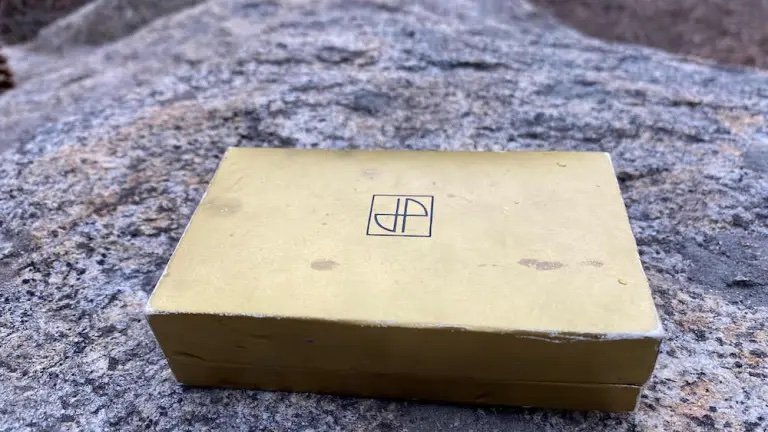
The perfume is called Joy, but the black box looked sinister to me as a kid, funereal; it looked like it should hold ashes, cigarettes, a lifeless heart. The perfume didn’t smell joyful to me, either—it smelled like sugar laced with poison. I couldn’t understand why my mother loved it so, why my father bought it for her so religiously—tiny bottles in a cushioned box, a larger bottle for extra special occasions. I was told it was expensive, rare, told it was the most generous gift, but it bothered me, felt like something between my parents I couldn’t access, some terrifying adult brand of joy.

The Poet as a Revolutionary Force – A Review of Cedar Sigo’s Guard the Mysteries
Guard the Mysteries (Wave Books, 2021) is a collection of five talks given by poet Cedar Sigo for the Bagley Wright Lecture Series in 2019. His scope is broad, considering everything from poetry’s potential as a revolutionary force to concepts of identity, personal and shared histories, and the life and work of poets who have been influential in his practice. But “lectures” would be too reductive of a word for what Sigo has accomplished. Each talk works in dialogue with the others, oscillating fluidly between different themes and ideas, rhythmically building towards a satisfying culmination. The lectures, presented over several months, achieve an orchestral resonance when read consecutively. Sigo touches the heart of what it means to not only be a poet, but to be living. That is not to say these talks lose themselves in abstract, ethereal concepts—they are teeming with interesting anecdotes about key figures in America’s literary and activist history, and are firmly grounded in the real world. Writers and readers alike will find this work enriching and informative.

Review: Of Women and Salt by Gabriela Garcia
From the cigar factories of 19th century Cuba to sleazy Miami nightclubs and a family detention center in Texas, Gabriela Garcia’s debut novel, Of Women and Salt, follows the lives of women fighting to survive in countries and relationships hellbent on destroying them.

Dear John Ashbery
Everything is behind a chain linked fence and I think I might have tennis elbow. I’ve trained for this my whole life and now here we are with no words in the night sky. They fly to the moon to recharge, before dusk, especially in December. Christmas carolers are practicing Jingo Bells in their driveways and the clouds are about to pop. Glitter will get everywhere, but hopefully not in our exhaust pipes. I can see this beautiful mess when I close my eyes and listen to you reading on the other side of the tulips. I didn’t think your voice would get through, but the ground is still soft. Now that I am getting to know your absence it’s easier to describe the texture of sound, real or imagined. It’s like holding the moon in one hand and memorizing it with the other. Haven’t you responded to the moon before you served it on a fat slice of wheat bread? (Here’s the recipe: heat du jour, filtered water, cultured wheat, sea salt, whole grain einkorn.)

Getting In The Game: An Interview With Jordan E. Franklin
Jordan E. Franklin is a Brooklyn based poet with two projects coming out in 2021 – When the Signals Come Home, a full-length collection from Switchback Books which won the Gatewood Prize, and a chapbook entitled boys in the electric age which will appear with Tolsun Books. In this interview, she talks with Columbia poetry MFA candidate Catherine Fisher about music, family and being a native Brooklynite.


Lifting the Bird’s Feather: A Love Letter to Interpreting
Tiffany Troy, Assistant Translation Editor for Columbia Journal, spoke with poet, educator, and interpreter Judith Small to discuss the magic of language learning, the musicality of traversing languages, the ethics of interpretation and the deeply human prayer in Second Tongue (Brighthorse Books, 2019).

Eggbert
It isn’t so much that my brother lives on the freer side of a prison wall, or that when I’m released—sometime after 2024—I will have spent more years inside than I have lived in the outside world. What’s useful for you to know is that I will bring home with me an overflowing collection of memories, both terrific and terrible, of the people I met in this razor-wired land of misfit toys and wayward boys. It’s the memory of these people that will drag me home alive.

How We See
After twenty-five years, my mother is having the third dinner date of her life. The first was an Italian man with a motorcycle. Second, an American who gave her a great wedding, dual citizenship, two children, then left her for an American woman. This time it is a Russian man with only one eye.

3 Poems by Daniel Varoujan Translated From The Armenian
Muse of my ancestors, tell me how the plowman,
grabbing the crooked horns of his plow,
tears the barren breast of the earth;