
ISSUE 63 AND EARLIER
Published online prior to Sept. 2025

Hanya Yanagihara’s To Paradise: An Epic Novel For All Queer Times
In his 2015 review published in The Atlantic, Garth Greenwell heralded Hanya Yanagihara’s previous novel, A Little Life, as potentially “the great gay novel,” praising its perceptiveness in depicting the gay male experience in America and positing that the book was “the most ambitious chronicle of the social and emotional lives of gay men to have emerged for many years.” To some extent, Yanagihara’s latest novel, To Paradise, might be considered an even greater gay novel. Not only is it queer in its foregrounding of gay protagonists and socio-political themes of discrimination, non-traditional relationships, the AIDS epidemic, and racial and class-conscious intersectionality, but also in its upending of literary forms and transgressive world-building. Yanagihara excels at blending the recognizable with the inventive and also at times the absurd to tell tales of unconventional love, desire, and longing. Like its predecessor, To Paradise deserves a place on the mantel of esteemed genre-bending queer fiction, alongside Renee Gladman’s The Event Factory, Samuel R. Delany’s Dhalgren, and other novels engaged in radical world-building.
60 for 60: Borges on ‘Leaves of Grass’
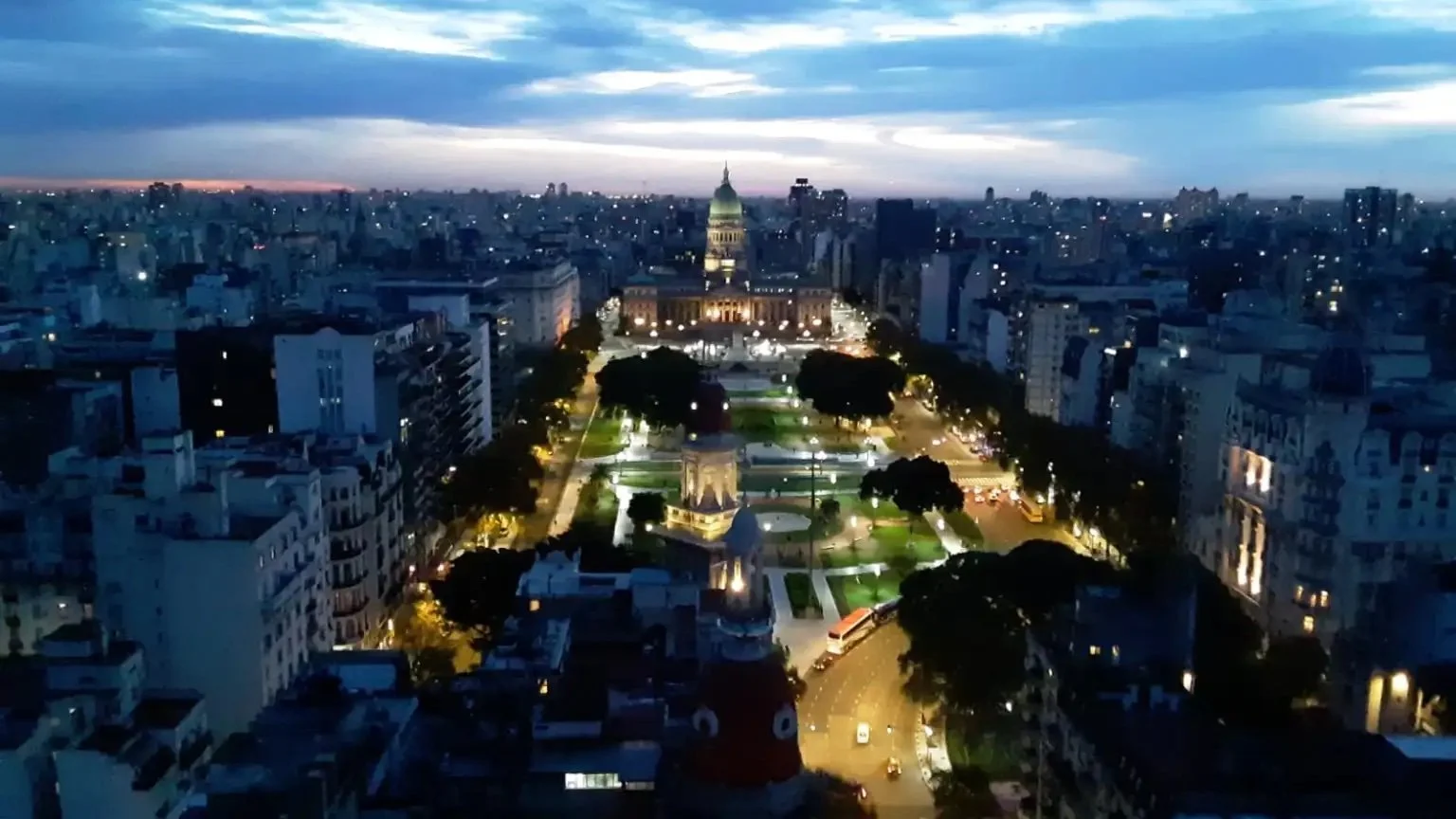
Democracy is difficult to think about, difficult to write about, and difficult to live. At least, in 2022, a lot of people seem to believe so. Forty years ago, Jorge Luis Borges (writer of poems, essays, and “fictions”) spoke to an assembly of Columbia Writing students and made a beautiful claim: that Whitman’s Leaves of Grass is the most daring and the most successful of all literary experiments, because it is an epic poem of democracy. Such a poem had never been attempted before and has not been attempted since. (The picture above was taken by yours truly from a balcony of the Palacio Barolo, a Dante-themed building in Buenos Aires. The Argentina of Borges was and is no stranger to the fraught nature of democracy in a world ideologized in favor of hierarchy: so the juxtaposition of Dante and Whitman is very neat.) In the face of such a difficulty, many fall silent; not Whitman.

60 for 60: Snowtown
January can be a rather miserable month: after the excitement of the new year, one is left with the same old grayness. But a poet finds potential newness in every moment; and I find that, speaking of winter, snow can be an excellent excuse for a poem. Consider Wallace Stevens’s “The Snow Man“: one doesn’t forget a thing like that.
60 for 60: The Floodmeadow
The fifty-ninth issue of Columbia Journal featured a poem by English poet Toby Martinez de las Rivas, and, as it so happens, I was given a copy of Rivas’s book Terror as a present at Christmas. In the interest of superstition, I felt I couldn’t not feature his poem; and, jokes aside, I like “The Floodmeadow.”

60 for 60: At the Gate in the Middle of My Life
During the spring/summer of 1983, Columbia Journal published Linda Gregg’s poem “At the Gate in the Middle of My Life” in its eighth issue. An award-winning American poet, Gregg often explored loss, struggle, and nature in her writing. In this poem from our archive, she demonstrates her close inspection of what it means to be at the entrance of one’s midlife or the central period of one’s years.

2021 Spring Contest Runner-Up in Poetry: mama,
knows what it’s like to hold & not
be held mama nancy, who is not my
mama, but is the oldest mama I have
Two Poems by Arthur Rimbaud & Two Poems by Jean-Michel Basquiat
I will, no doubt, tell your story one day:
After all, it is always with us.
A, black, shadows

All Redheads Think They’re Evil
Almost immediately, Emma noticed the girl in the transparent pink dress standing next to the champagne tower, her red bra completely visible underneath frothy frills and folds. Emma snuck one glance as her boyfriend, Leonard, helped her out of her coat, then another as they hugged their hosts, Shelly and Adrienne. The e-vites had required cocktail attire, and glancing around the apartment, everyone else had taken this to mean black. With her copper-red curls piled high on her head, the girl by the tower looked like the Strawberry Shortcake dolls Emma played with as a child, utterly out of place.

60 for 60: Recent Black Literature—The Political Dimensions
I recently got around to re-reading Robin Coste Lewis’s genius “Voyage of the Sable Venus.” As a poet interested in erasures and cut-ups, and as a queer Venezuelan immigrant deeply concerned with and invested in the liberation of every marginalized community, I was deeply moved by her project. To use the very language of oppressive art institutions, pamphlets, and works to weave the narrative of Black liberation and conceive of a future for the Black community that was forcibly taken to this country is something I held onto as I looked through Columbia Journal‘s archives, another institution that has regrettably done little in the way of publishing Black voices. I’m honored to work here at a pivotal moment, when the largest strike in the country is taking place on my campus and when the current editorial team at the Journal is making a conscious effort to elevate Black voices.

60 for 60: A Poetic State
I cut onions and squeeze lemons: I behold the spectacle of the world.“A Poetic State” by Czesław Miłosz, translated from Polish to English by the author and Robert Hass, is a wonder to behold. It was published in the eighth issue of Columbia Journal in 1983.

60 for 60: Irish Women Explorers of the Nineteenth Century
Irish poet Eavan Boland passed away on April 27, 2020. She will be remembered for her finely wrought lyric meditations on womanhood, domesticity, and Ireland’s colonial history.

2021 Columbia Journal Winter Contest – Deadline Extended to December 31, 2021
The Columbia Journal is delighted to announce that the 2021 Winter Contest is now officially open for submissions in art, fiction, nonfiction, poetry, and translation. Our judges this year are Arthur Lewis (art), Danielle Evans (fiction), Pamela Sneed (nonfiction), Harmony Holiday (poetry), and Wangui Wa Goro (translation).
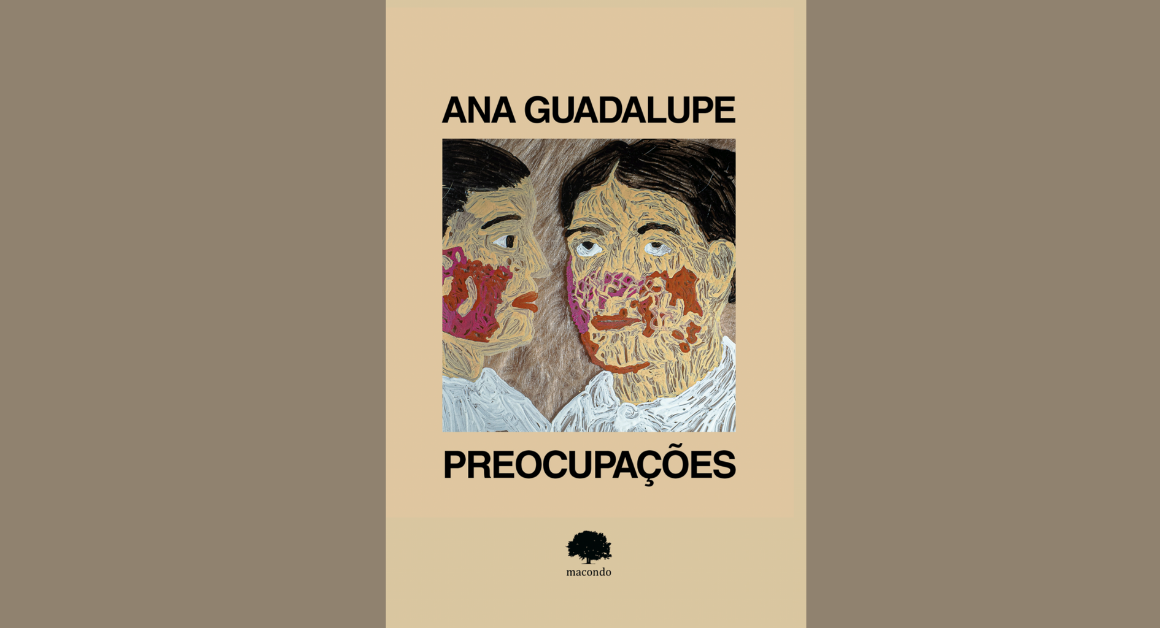
“eyes” and “houses” by Ana Guadalupe, Translated from the Portuguese by Ananda Lima
eyes
as a future blind person
I prefer to engage
with those who also have
blindness ahead of them

Review: White on White
Ayşegül Savaş’s novel White on White, published December 7th of this week, functions like a Russian doll. Throughout the story, an unnamed narrator cracks open one doll after the next for us, revealing evermore intricate renderings of her subject of observation, until we get to some—possibly crystallized—core.

60 for 60: A Sense of Things
In Tiphanie Yanique’s story, “A Sense of Things,” which appeared in Columbia Journal in 2013, love is always already lost. Set in 1950, the story alternatingly inhabits the consciousnesses of Jacob and Anette, two lovers from the island of St. Thomas who are temporarily apart. Jacob is abroad in the US studying to be a pediatrician. Unlike Penelope, that other lonely and loving island dweller of literature, Anette quietly abandons Jacob for Franky, a firefighter with whom she is not in love, but who at least is in the same country. Anette and Franky appear in a movie together; Jacob sees the poster and books a flight home. Thus, the catalyst of this love-triangle story is a reproduced screen-image, an object in circulation: a stand-in for the way partnership itself is circulated among Yanique’s characters.—

60 for 60: HISTORY KEEPS ME AWAKE SOME NIGHTS
In one of my favorite memoirs, Close to the Knives: A Memoir of Disintegration, David Wojnarowicz writes, “To make the private into something public is an action that has terrific repercussions in the preinvented world.” For Wojnarowicz, the “preinvented world” is the regulatory structure we are all born into, one that demands conformity and that is inimical to the expression and desires of people who exist outside its self-justificatory narratives. As a gay man who lived and created at the height of the AIDS epidemic, a moment when the government’s disregard for historically marginalized people became painfully apparent, Wojnarowicz was acutely aware of art’s potential to publicize narratives that the preinvented world wished to remain private. By working in any medium that facilitated his expression—sculpture, painting, writing, spoken word, music, among others—Wojnarowicz transformed every tender creation into an act of resistance, proving that private experience can make terrific noise in a world that insists upon silence.

One Poem by Patrycja Humienik
The internet was my childhood refuge. It's where I practice still. Erase
my browsing history.

Excerpt, pp. 27–43, from Dust Collectors by Lucie Faulerová, Translated from Czech by Alex Zucker
I’m an operator on a private information line that’s past its sell-by date. I inform people. About everything. If there’s something you don’t know, don’t hesitate, just ring me up. I can tell you absolutely anything. As long as it’s in our database or on the internet. So if you want to save some money, just look it up yourself. I can tell you how many teeth a squirrel has, what time your bus is coming, the current exchange rate for the US dollar, which highways are congested right now, how much Justin Bieber weighs, the closest branch of your bank, the number for the post office, or what time it is in Arunachal Pradesh. I’m your instant, obligatory answer. All day long I do nothing but listen to what people want, what they’re looking for, what they need. The world poses questions, I answer. A job as essential as Anna’s existence, my narrator thinks. In the age of the internet and maximum access to information, I play the part of the know-it-all. The online savior of the illiterate. I can tell you anything, and if I don’t know, I will gladly put you through to somebody who does.

60 for 60: The Hernia
In “The Hernia,” published in Columbia Journal’s thirty-second issue, American poet Ross Gay ruminates about the warmth of spring as he awaits surgery for an abdominal hernia.

60 for 60: The Sexual Benefits of Upright Walking
From the Spring of 1997 comes Matthew Brogan’s poem “The Sexual Benefits of Upright Walking” about the body, its functions, and the very substance with which we proceed. Likening the body to a vessel and that vessel to its functions, Brogan’s piece from the twenty-eighth issue of Columbia Journal is about intention, the desire to understand, and the wherewithal to continue forward. Using language to denote the way we progressed throughout history, from tails to four legs to two legs to a straight spine, Brogan masterfully relays the journey we’ve begun and perhaps are still on.